
The Initial Shock: What Happens Right After an Accident in California?
Nobody wakes up planning for a car accident. Honestly, the moments right after a fender bender or a more serious collision can feel like a blur. You’re probably shaking, maybe a little disoriented, definitely stressed. That’s completely normal. Your mind races: Is everyone okay? Is my car totaled? What do I do *now*?
First things first: safety. Pull over to a safe spot if you can. Turn on your hazard lights. Check on yourself and any passengers. Then, quickly check on anyone in the other vehicle. If anyone’s hurt, or if there’s significant damage, or if the road is blocked, call 911 right away. Don’t hesitate.
Once immediate safety is handled, it’s time to gather information. This part often feels awkward, but it’s really important. Get the other driver’s name, phone number, and insurance information. Snap pictures of everything — the damage to both cars, the license plates, the intersection, any road signs, even the weather conditions. Take photos of the other driver’s insurance card and their driver’s license. Don’t forget to get contact details from any witnesses, too. Their perspective can be gold later on.
One thing you absolutely *must not* do? Admit fault. Even if you think you might be to blame, don’t say it. Don’t apologize for the accident itself. Just stick to the facts and exchange information. The insurance companies will figure out who’s at fault. That’s their job.
Notifying Your Insurer: The First Formal Step
Okay, you’re home, maybe still a bit rattled. Now what? Your next move should be to call your insurance company. Do it as soon as you can, preferably within 24 hours. Even if you’re not sure you’ll file a claim, it’s a good idea to let them know. They’ll open a claim file and assign an adjuster.
When you call, they’ll ask for all those details you just collected: names, dates, times, locations, and a basic description of what happened. They’ll also want to know about your coverage. Did you opt for just liability, which covers damage you cause to others? Or do you have collision coverage, which helps pay to fix your own car? Maybe you added comprehensive coverage for things like theft or fire — a real concern in places like Ventura County when wildfires kick up. And uninsured motorist coverage? That’s a lifesaver if the other driver doesn’t have insurance, which, sadly, happens more often than you’d think here in California.
This is where having a good insurance agent really shines. Someone like Karl Susman at California Driver Insurance (CA License #OB75129) can walk you through this initial call. He’s seen it all. He knows the questions to ask, and he can help you understand what your policy actually covers – and what it doesn’t. You can reach his team at (877) 411-5200.
When the Other Driver’s Insurer Calls
Here’s where it gets interesting. Often, the other driver’s insurance company will call you. Probably pretty quickly. They might sound friendly, even helpful. But remember, they’re not on your side. Their goal is to minimize what their company has to pay out.
Be polite, absolutely. But be brief. You don’t have to give them a detailed statement. Tell them you’ve already reported the accident to your own insurer and direct them to speak with your adjuster. It’s perfectly fine to say, “Please coordinate with my insurance company.” You don’t owe them anything more.
The Investigation Begins: What Adjusters Do
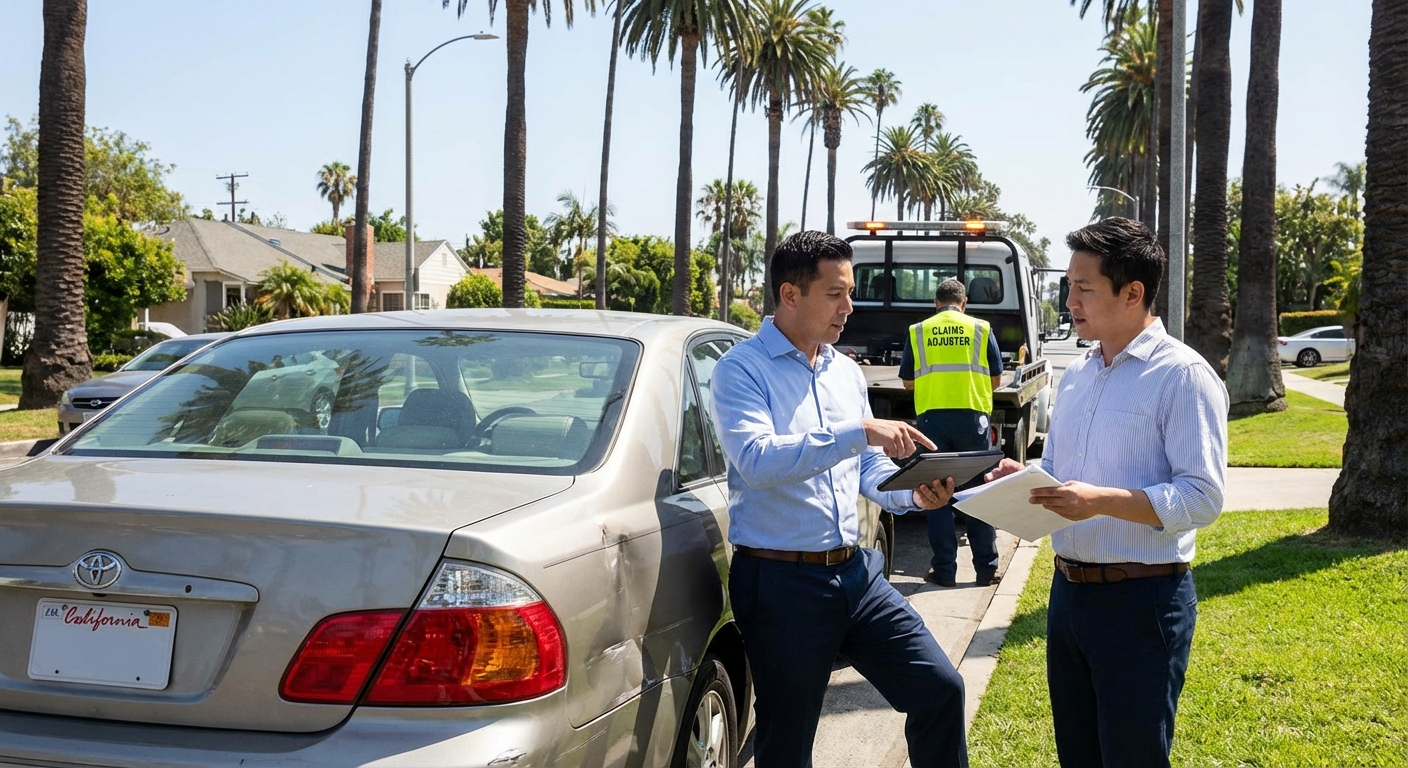
Once a claim is filed, an adjuster takes over. Think of them as the detective for your insurance company. Their job is to figure out exactly what happened, who’s responsible, and how much it’s all going to cost. They’ll review police reports, look at those photos you took, and talk to any witnesses. They might even inspect the damage to both vehicles themselves.
This part can feel incredibly slow. You’re probably anxious to get your car fixed, but the adjuster needs to be thorough. They’re trying to determine fault, which in California, isn’t always a clear-cut “all or nothing” situation. We have something called “comparative negligence.” That means if you’re 20% at fault and the other driver is 80% at fault, you might still recover 80% of your damages. Proposition 103, passed way back in 1988, has a lot to say about fairness in claims and how fault impacts rates, but the basic idea of shared responsibility has been around longer. It can be frustrating, waiting for them to make a decision, especially if you’re dealing with a rental car or no car at all.
Getting Your Car Fixed (or Replaced)
Once fault is determined and coverage is confirmed, you’ll get the green light to get your car repaired. Your insurance company might suggest certain repair shops, but here’s the thing: in California, you have the right to choose *your* repair shop. Pick one you trust, or one that’s known for good work in your area, whether that’s in the Inland Empire or right in the middle of the Valley.
The shop will give an estimate. Sometimes, once they start taking things apart, they find more damage. This is called a “supplemental estimate,” and it’s common. Your adjuster will work with the repair shop on these.
What if your car is really, really damaged? If the cost to fix it is more than its actual cash value (ACV) — what it was worth right before the accident — your car might be declared a “total loss.” It’s a tough pill to swallow, especially if you loved that car. Your insurer will pay you the ACV, minus your deductible. This isn’t what you paid for the car, it’s what a similar car would sell for in your local market.
And if you have rental car coverage? That’s when it kicks in. It’s a small add-on that makes a huge difference, especially if your car is in the shop for weeks.
Dealing with Injuries: A Different Kind of Claim
A car accident isn’t just about the car. Sometimes, people get hurt. Even a minor fender bender can cause whiplash or other injuries that don’t show up right away. If you feel any pain or discomfort after an accident, get checked out by a doctor immediately. Your health is absolutely number one.
Unlike some states, California doesn’t have Personal Injury Protection (PIP) as a standard. Here, you’ll rely on your health insurance to cover medical bills, or your car insurance’s “Medical Payments” (MedPay) coverage if you bought it. MedPay is typically a smaller amount, like $5,000 or $10,000, that covers immediate medical costs regardless of fault.
If your injuries are more serious, or if the other driver was clearly at fault, you might have a personal injury claim against their insurance. This is a much longer process. It involves documenting all your medical treatments, lost wages, and pain and suffering. It can take months, sometimes years, to resolve these types of claims. Patience is definitely a virtue here.
When Things Get Tricky: Denials and Disputes
The short answer is yes. The real answer is more complicated. Sometimes, despite your best efforts, a claim might be denied. It’s a gut punch, for sure. Common reasons for denial include issues with your policy — maybe it lapsed, or the damage falls under an exclusion you didn’t know about. Sometimes, it’s a dispute over fault, or even suspicion of fraud.
If your claim is denied, don’t just accept it. You have options. You can appeal the decision directly with your insurance company. Provide any additional documentation or evidence you have. Another path is to file a complaint with the California Department of Insurance (CDI). They regulate insurers in the state and can investigate your case. In some situations, especially with larger injury claims or clear disputes over fault, talking to an attorney might be the next step.
Honestly, this is where having an independent insurance agent like Karl Susman becomes incredibly valuable. He’s not beholden to one specific company like State Farm or AAA. He works for *you*. He can review your policy, understand the denial, and often intervene on your behalf or guide you through the appeal process. He and his team at California Driver Insurance (CA License #OB75129, phone (877) 411-5200) advocate for their clients. It’s a big difference from trying to fight the system alone.
Having proper coverage from the start makes all the difference when a claim hits. Don’t wait until you’re in an accident to wonder if you’re truly protected.
Want to make sure your policy is ready for anything? Get a quote and review your coverage with an expert today: https://californiadriverinsurance.com/quote/
The California Difference: What Makes Claims Unique Here
California isn’t like other states. We’ve got our own quirks, and they definitely affect car insurance claims. For one, Prop 103 — that old ballot initiative — it doesn’t just impact how rates are calculated; it also gives consumers some pretty strong protections when it comes to claims handling. Insurers have rules they have to follow, and the CDI is there to enforce them.
Then there’s the sheer volume of drivers. Cruising the 405 in LA, or even the 5 through the Central Valley, you’re constantly surrounded by cars. More cars, more traffic, more accidents. It’s simple math. Which brings up something most people miss: the increasing cost of repairs. Cars today are packed with sensors, cameras, and computer systems. A “minor” bumper ding isn’t just plastic anymore; it could mean replacing a radar unit that costs thousands. Labor rates are up, parts are pricier. That’s why premiums jumped 40% between 2022 and 2024 for many drivers.
And let’s not forget our unique environmental challenges. Imagine a scenario like the 2025 LA fires (we hope it never happens, but we prepare for it): comprehensive claims would skyrocket. Cars burned, smoke damage, falling debris. While the FAIR Plan primarily handles property insurance for high-risk areas, the *spirit* of difficulty in finding coverage for certain risks can sometimes spill over into the auto market. We’ve seen major insurers like State Farm and Farmers pull back or restrict new policies in California, which just tightens the market for everyone. These factors make every claim, and every policy, a little more complicated here.
Proactive Steps: How to Make Your Next Claim Easier
No one wants to go through a car accident. But if you do, being prepared can save you a lot of headaches and heartache. Know your policy. Seriously, read it. Understand your deductibles, your limits, and what’s covered. Keep an “accident kit” in your car — a pen, paper, a camera (your phone works!), and maybe a small first-aid kit. It seems simple, but it makes a huge difference in those stressful moments.
Of course, driving safely is the best prevention. But accidents happen. Regularly review your coverage with an expert. Life changes, and your insurance needs change with it. Are you driving less? More? Did you get a new car? Did your teen driver just get their license? All these things should prompt a policy review. It’s about being ready, not just reacting.
Don’t wait for disaster to strike. Ensure your California car insurance is exactly what you need. Get a personalized quote and expert advice right now: https://californiadriverinsurance.com/quote/
FAQ: California Car Insurance Claims
- Do I have to report every fender bender to my insurance?
Not always. If the damage is very minor, under your deductible, and there are no injuries, you might choose not to report it. But be careful – sometimes damage appears worse later, or an injury surfaces. If there’s any doubt, or if another party is involved, it’s generally safer to report it to your insurer.
- Will my rates go up after *any* accident?
Not necessarily. If you’re found not at fault, your rates shouldn’t increase due to that specific claim. However, if you’re found at fault, or if you have a history of multiple claims (even not-at-fault ones), your rates could go up. It really depends on your insurer’s policies and the specifics of the accident.
- What if the other driver doesn’t have insurance?
This is a big one in California. If you have Uninsured Motorist (UM) coverage on your policy, it will kick in to cover your medical expenses and property damage, up to your policy limits. Without UM coverage, you’d typically have to sue the uninsured driver directly to recover your losses, which can be a long and difficult process.
- How long does a typical car insurance claim take?
It really varies. A simple property damage claim with clear fault might be resolved in a few weeks. If there are injuries, disputes over fault, or complex repairs, it could easily take several months, or even longer. Your adjuster should keep you updated on the timeline.
This article is for informational purposes only and does not constitute financial advice.