
What You’ll Learn
- How insurers define a “classic” car in California.
- Why standard auto insurance falls short for your special ride.
- The big difference between “Agreed Value” and “Stated Value” coverage.
- What specialized insurance providers look for in a classic car owner.
- Key coverage options designed just for collector vehicles.
- Smart ways to save money on your classic car policy.
- How an expert agent can help you protect your investment.
Your California Classic: More Than Just a Car
Picture this: You’re cruising down Pacific Coast Highway, the sun glinting off the chrome of your ’69 Camaro. Or maybe you’re showing off your pristine ’57 Chevy at a car meet in Pomona. Your classic isn’t just transportation. It’s a piece of history, a passion project, and often, a significant investment. But insuring that dream machine in California? That’s where things get a little different from your daily driver.
Honestly, a lot of folks assume their regular auto insurance policy will do the trick. They just add their classic to the same policy as their Honda Civic. That’s a mistake. A big one. Standard policies are built for depreciation, for cars that lose value the moment they roll off the lot. Your classic, however, likely appreciates. Or at least holds its value incredibly well.

Step 1: Understanding What Makes a Car “Classic” for Insurance
The first hurdle is figuring out if your car even qualifies for specialized classic car coverage. It’s not just about age, though that’s a big part of it. Most insurers consider a car “classic” if it’s generally 25 years old or older. Some might go as low as 15 years for certain unique or rare models.
But here’s the thing. Age isn’t the only factor. They also look at how you use the car. Is it your daily commute warrior, battling rush hour on the 405? Probably not. Classic car policies are typically for vehicles used for pleasure drives, car shows, club events, or occasional weekend cruises through the Napa Valley. Limited mileage is key. Insurers often cap annual mileage, sometimes as low as 2,500 or 5,000 miles.
They’ll also consider its condition. Is it meticulously restored, original, or a custom build? A barn find needing a full overhaul usually won’t qualify until it’s in better shape. Your classic should be well-maintained and stored securely – think a locked garage in San Diego, not a tarp in a driveway in the Inland Empire.
Step 2: Why Your Regular Policy Won’t Cut It
Let’s talk about why your standard auto insurance policy is a poor fit for your classic. It all comes down to how they value your car after an accident. Most standard policies use something called “Actual Cash Value” (ACV). This means if your classic is totaled, the insurer pays out what they think the car was worth *just before* the accident, factoring in depreciation.
Imagine your ’65 Mustang convertible. On a standard policy, if it’s wrecked, they might look at Kelley Blue Book or NADA guides for a 1965 Ford Mustang and offer you a few thousand dollars. That’s not reflecting the thousands you poured into restoring it, or its market value as a collector’s item. You’d be left holding the bag, heartbroken and out a significant chunk of change.
That’s not the whole story. Many standard insurers simply don’t understand the classic car market. They don’t have the expertise to properly appraise a rare model or account for the specialized parts and labor costs involved in a repair. You need an insurer who speaks fluent classic car.
Step 3: The Big Difference: Agreed Value vs. Stated Value
This is perhaps the single most important concept in classic car insurance. Don’t gloss over it.
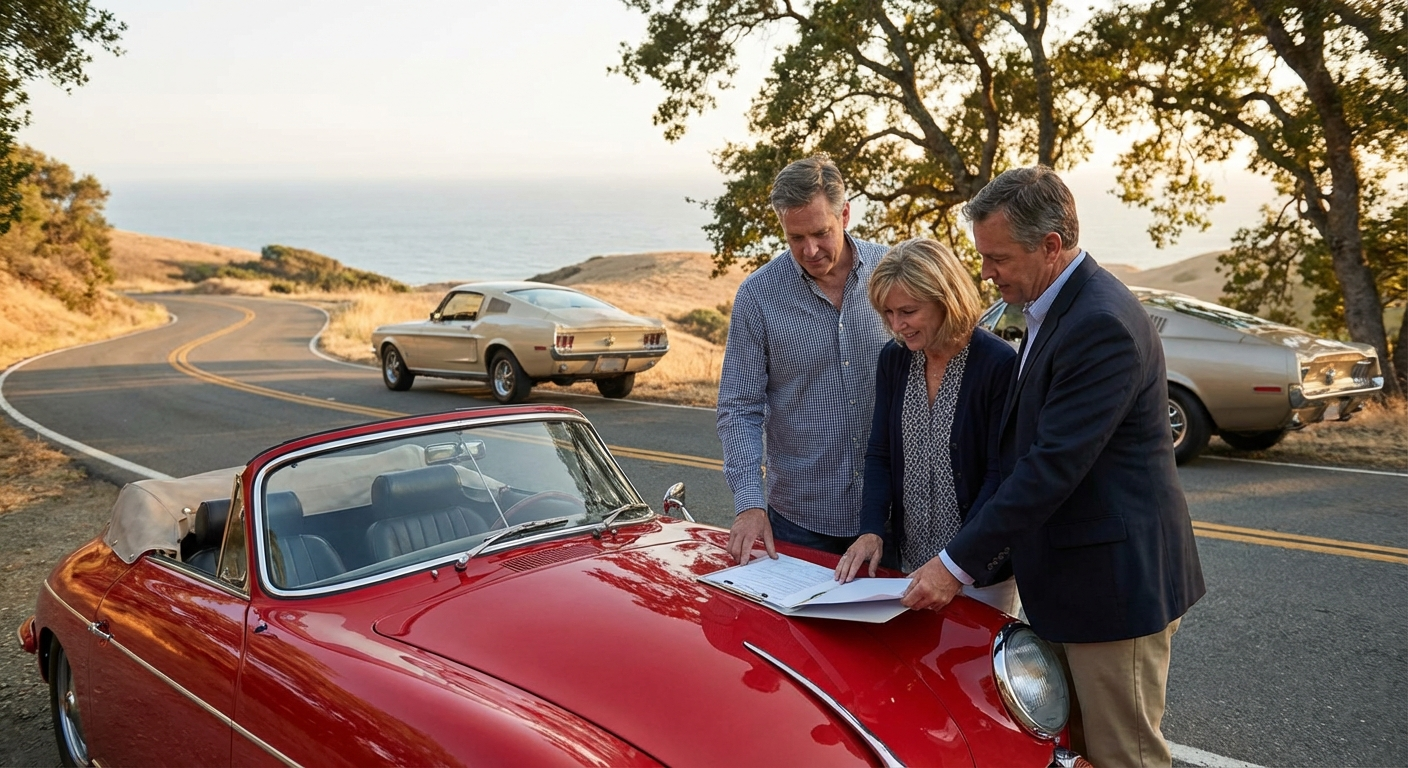
You absolutely want an **Agreed Value** policy. This means you and the insurance company agree on your car’s value *before* the policy even starts. This figure is often backed by a professional appraisal or your detailed records of restoration. If your classic is a total loss, the insurer pays you that exact agreed-upon amount, minus your deductible. No arguments, no surprises. That’s peace of mind.
But wait — some standard insurers, or even some less specialized classic car policies, might offer “Stated Value” coverage. This sounds similar, but it’s not. With a **Stated Value** policy, the amount you “state” your car is worth is just the *maximum* the insurer *might* pay. If a claim occurs, they can still investigate and decide the car was worth less than your stated value, and pay you that lower amount. It’s a tricky loophole that can leave you underinsured. Don’t fall for it. Always ask for Agreed Value.
Step 4: Finding Specialized Insurers Who “Get It”
You won’t typically find Agreed Value policies for classic cars at every corner insurance agency. While big names like State Farm or Farmers might offer *some* classic car options, often they’re through partnerships with specialized carriers. Companies like Hagerty, Grundy, or Safeco (often via independent agents) are built specifically for collector vehicles.
These companies understand the nuances. They know the difference between a Concours-level restoration and a weekend driver. They have adjusters who specialize in classic car repairs and valuations. They’re the experts you want on your side.
Step 5: Key Coverage Types for Your Collector Car
Beyond Agreed Value, specialized policies offer unique protections tailored to classics.
* **Spare Parts Coverage:** Many collectors have a stash of rare or expensive spare parts. This coverage protects them, even if they’re not attached to the car.
* **Roadside Assistance:** Imagine breaking down with your vintage beauty on a deserted stretch of Highway 101. You don’t want a standard tow truck dragging your low-slung classic. Specialized roadside assistance ensures flatbed towing and experienced handlers.
* **Car Show and Tour Coverage:** If you regularly take your car to shows in Monterey or participate in rallies, this coverage protects it during transit, while parked at an event, and even against damage from spectators.
* **Restoration Coverage:** If your car is actively undergoing restoration, some policies can cover it during the process, adjusting the value as improvements are made.
* **Inflation Guard:** Some policies automatically increase your Agreed Value by a small percentage each year to keep pace with the appreciating classic car market.
Step 6: Smart Ways to Save on Your Classic Car Policy
You might think specialized coverage means sky-high premiums. Not always. Insurers actually see classic car owners as lower risk. Why? Because you cherish your car, drive it carefully, and store it securely. That translates to potential discounts.
* **Limited Mileage:** The less you drive, the lower your premium. Be honest about your annual mileage.
* **Secure Storage:** A locked, private garage is always better than street parking. If you’ve got an alarm system or live in a gated community in Ventura County, mention it.
* **Car Club Membership:** Belonging to an officially recognized car club (like the Classic Car Club of America) can sometimes net you a discount. It shows you’re serious about your hobby.
* **Multi-Car Discount:** If you insure multiple classics, or even your daily drivers through the same specialized agent, you might see savings.
* **Good Driving Record:** This one’s a no-brainer. A clean driving record always helps.
* **Anti-Theft Devices:** Modern alarms or tracking devices can lower your risk of theft, especially for highly desirable models.
Step 7: Finding the Right Agent to Protect Your Investment
This is where an independent agent truly shines. Someone who understands the classic car market, the different specialized carriers, and the unique needs of California collectors. You don’t want a generalist trying to shoehorn your vintage Porsche into a standard policy.
Someone like Karl Susman of California Driver Insurance (CA License #OB75129) has the experience to guide you. An independent agent works for *you*, not a single insurance company. They can shop around with multiple specialized carriers to find the best Agreed Value policy that fits your specific classic and your budget. They know the ins and outs of California’s insurance rules and how they apply to collector vehicles.
They’ll ask the right questions: How often do you drive it? Where do you store it? Have you had it appraised recently? These details are key to getting the right coverage at a fair price.
Step 8: The Application Process: What to Expect
Getting classic car insurance isn’t quite like buying a policy online for your minivan. It’s a bit more involved, but for good reason.
You’ll likely need to provide:
* **Photos:** Clear, recent pictures of your car from all angles, interior, engine bay, and trunk.
* **Appraisal:** For higher-value vehicles, a professional appraisal from a qualified classic car appraiser is often required. This helps set that Agreed Value.
* **Proof of Storage:** Photos of your garage or details about your secure storage facility.
* **Mileage Estimate:** Your best estimate of how many miles you’ll drive annually.
* **Driver History:** Details about your driving record and any other drivers who will operate the classic.
It might seem like a lot of paperwork, but it’s all designed to ensure you get the exact right coverage for your cherished vehicle.
Step 9: What Happens When a Claim Arises?
Here’s where that Agreed Value really pays off. If your classic suffers damage, your specialized insurer will work with you to get it repaired by qualified shops that understand vintage vehicles. They know that finding original parts or skilled craftsmen for a custom paint job isn’t the same as fixing a modern car.
If it’s a total loss, you’ll receive the Agreed Value amount, no haggling. This avoids the heartache and financial hit of trying to replace a unique vehicle with only an ACV payout. It’s the ultimate protection for your investment.
Ready to explore options for your California classic? You can start by getting a quote today. It’s simple, quick, and the first step to securing the right protection for your prized possession.
Click here to get a classic car insurance quote!
Frequently Asked Questions About Classic Car Insurance in California
Can I drive my classic car daily with this type of insurance?
Generally, no. Classic car insurance policies are designed for limited use – pleasure driving, car shows, club events. They’re not meant for daily commuting or running errands. If you use your classic daily, you might not qualify, or your claim could be denied.
Do I need an appraisal for my classic car?
For many policies, especially those with higher Agreed Values, an appraisal from a qualified classic car appraiser is required. This helps establish the fair market value and ensures both you and the insurer agree on the car’s worth from day one. For lower-value classics, detailed photos and documentation of restoration might be enough.
What if I modify my classic car after getting insurance?
If you make significant modifications that increase your car’s value – say, an engine swap or a custom paint job – you absolutely need to inform your insurance provider. Your Agreed Value will likely need to be updated, and your premium might adjust. Failing to do so could leave you underinsured if a loss occurs.
Is classic car insurance more expensive than regular car insurance in California?
Not necessarily. While the coverage is specialized, classic car owners are often seen as lower risk. Because classics are driven less, stored securely, and maintained meticulously, premiums can sometimes be surprisingly affordable, especially compared to insuring a brand-new performance car.
What happens if my classic car is stolen in California?
If your classic car is stolen and not recovered, an Agreed Value policy means you’ll receive the full agreed-upon amount, minus your deductible. This is a huge benefit, as tracking down a unique, stolen classic can be incredibly difficult, and replacing it at market value would be a challenge without that agreed payout.
Protecting your classic car in California is about more than just a policy; it’s about preserving a passion. Don’t leave your cherished vehicle vulnerable with inadequate coverage. Take the time to find the right specialized policy.
Get your personalized classic car insurance quote now and drive with confidence!
This article is for informational purposes only and does not constitute financial advice.