
What You’ll Learn: This guide breaks down the two main types of coverage that protect your car in California: collision and what’s often called “other than collision” coverage. You’ll discover what each one actually covers, who really needs them, and how to decide which options make sense for your budget and your vehicle. We’ll also look at how a local expert, like Karl Susman, can help you make smart choices for your Golden State driving.
Understanding Your California Car Insurance Basics
Driving in California means more than just knowing your way around the 405 or finding a decent parking spot in San Francisco. It also means understanding your car insurance. You know you need liability coverage – it’s the law, protecting others if you cause an accident. But what about your own ride? That’s where things get a little more interesting, and often, a lot more confusing.
Most drivers hear terms like “collision” and “comprehensive” thrown around. People often use them interchangeably, but they’re not the same thing. Not at all. They protect your car from very different kinds of trouble. Knowing the difference could save you a lot of money or a lot of headaches down the road.
This isn’t just about picking a policy. It’s about building a safety net that fits your life, your car, and your wallet here in California. Let’s walk through it.
Collision Coverage: When You Hit Something (Or Something Hits You)
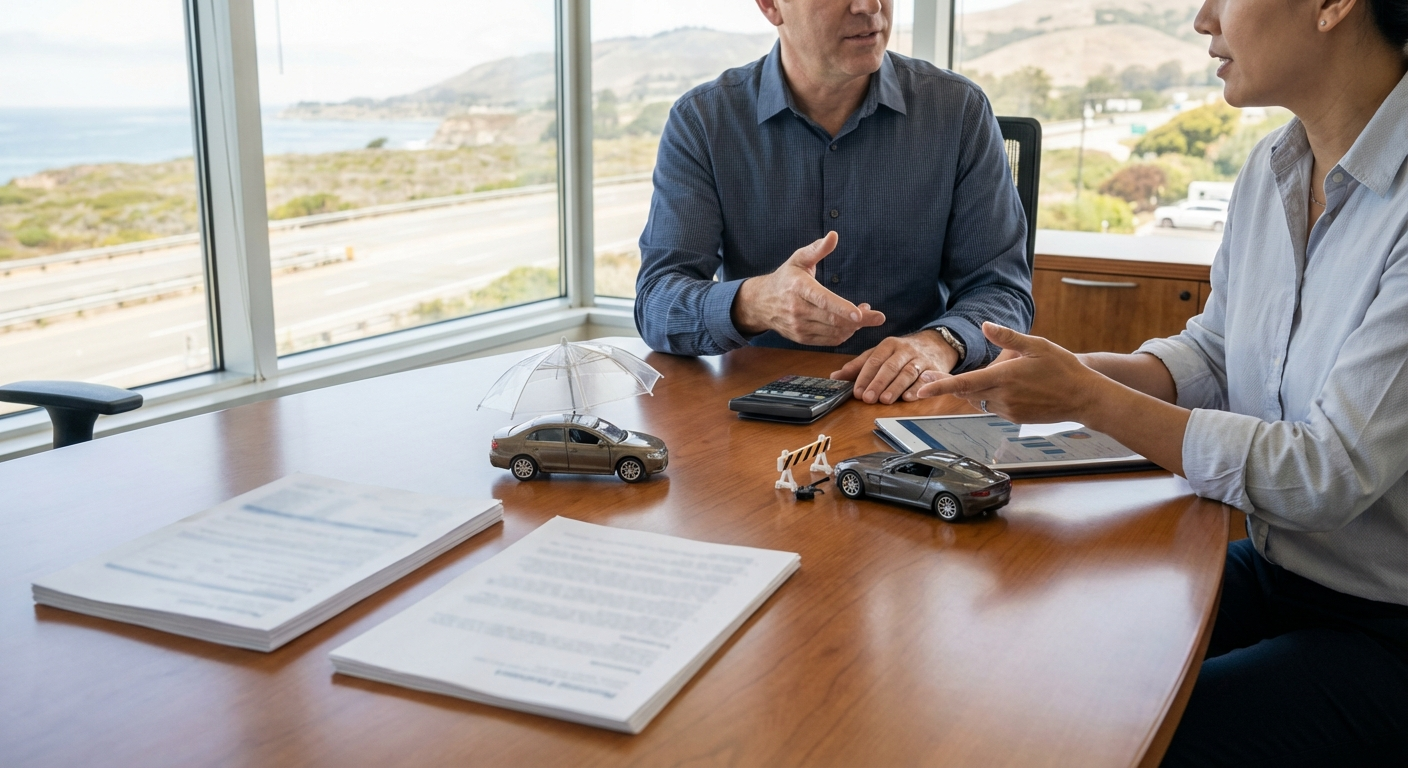
Step 1: What Collision Coverage Does
Think of collision coverage as your car’s personal bodyguard against bumps and crashes. If your car gets damaged in an accident where you’re at fault – or even if you’re not, but the other driver is uninsured or underinsured – this is the coverage that steps in. Did you back into a pole in a crowded parking lot in Santa Monica? Collision. Swerved to avoid a deer on a winding road in the Sierra foothills and hit a guardrail? Collision. Got into a fender bender on the 101 during rush hour? Collision.
It pays for the repairs to your own vehicle. Or, if the damage is bad enough, it pays out the actual cash value of your car, minus your deductible. That deductible is the amount you agree to pay out-of-pocket before your insurance kicks in. Pick a $500 deductible, and you pay the first $500 of a claim. Choose $1,000, and your premiums usually go down, but you’ll pay more upfront if something happens.
Step 2: Who Needs Collision Coverage?
Honestly, if you’re still paying off your car, your lender almost certainly requires you to carry collision coverage. They want their investment protected, naturally. It’s a standard requirement for leased vehicles, too.
But what if your car is paid off? That’s when the real questions start. If you’re driving an older model – say, a 2008 Toyota Camry with 200,000 miles – the cost of collision coverage might actually be more than the car is worth over a few years. It just doesn’t make financial sense for some older vehicles. However, if your car is relatively new, expensive to repair, or you just couldn’t afford to replace it if it got totaled, then collision coverage is a really smart move. Think about a new electric vehicle navigating the streets of downtown Los Angeles; even a minor scrape can mean big repair bills.
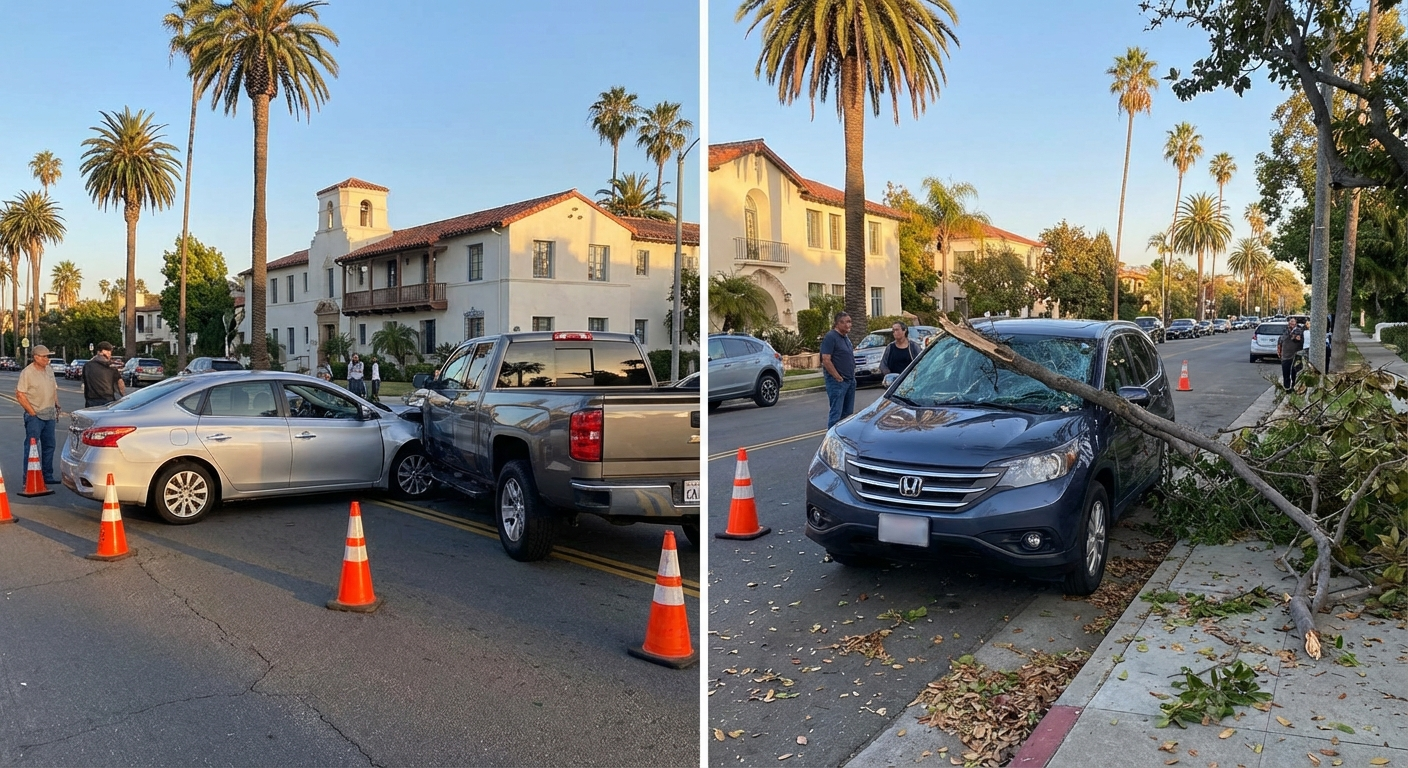
“Other Than Collision” Coverage: For Everything Else That Can Go Wrong
Step 3: What “Other Than Collision” Coverage Handles
Now, let’s talk about the coverage often called “comprehensive.” The industry term is actually “other than collision,” which is a pretty good description. This coverage is for all the weird, wild, and sometimes devastating things that happen to your car when it’s not actually involved in a crash with another vehicle or object.
Did someone steal your car from your driveway in the Inland Empire? “Other than collision.” A tree branch fell on your roof during a winter storm in Northern California? “Other than collision.” Vandals scratched your paint job while it was parked overnight in Oakland? “Other than collision.” What about a rock cracking your windshield on Highway 5? Yep, that’s it too. And here in California, with our unique challenges, this coverage is super important for things like wildfire damage or even a run-in with a deer in rural areas.
Like collision, this coverage usually comes with a deductible. Often, the deductible for “other than collision” is lower than collision – sometimes even $0 for glass repair, depending on your policy.
Step 4: Who Benefits From “Other Than Collision” Coverage?
Just like collision, if you have a loan or lease on your car, your lender will require “other than collision” coverage. It protects against theft, fire, and other risks that could devalue their asset.
But even if your car is paid off, this coverage makes a lot of sense for many California drivers. If you live in an area with high car theft rates – parts of Los Angeles or the Bay Area, for instance – this coverage is a no-brainer. If you park on the street often, making your car more vulnerable to vandalism or falling debris, you’ll want it. And with California’s increasing risk of natural disasters, like the 2025 LA fires (just an example, thankfully), having protection against fire damage is incredibly valuable.
It’s about safeguarding your investment from risks that are completely out of your control. For many, the peace of mind alone is worth the premium.
The Big Difference: Why They’re Not the Same
Step 5: Separating the Scenarios
Here’s where it gets interesting. The core difference is simple: collision covers damage from your car *colliding* with something while in motion. “Other than collision” covers damage from almost everything else – often when your car is parked or not directly involved in an impact with another vehicle or object.
Imagine this: You’re driving through Ventura County and swerve to avoid a squirrel, hitting a mailbox. That’s collision. But say you park your car at the beach, and when you come back, someone has spray-painted graffiti on it. That’s “other than collision.” Or, a tree falls on your parked car during a storm. Again, “other than collision.” But wait — what if you hit that tree while driving? Collision. See the distinction? It’s about the *type* of incident, not just the damage itself.
They truly work hand-in-hand to give your car nearly full protection. One protects you from crashes, the other from everything from theft to hail to wildfires.
Deciding What’s Right for Your California Ride
Step 6: Weighing Your Options
Making the right choice for your California car insurance involves a few honest questions about your car and your finances.
- What’s your car actually worth? For a brand new SUV, both coverages are a must. For a 15-year-old sedan, maybe not. If the annual cost of the coverage starts to approach or exceed the car’s actual cash value, it might be time to drop one or both.
- How much can you afford to pay out of pocket? If your car gets totaled and you don’t have collision or “other than collision” coverage, you’re on the hook for a new car. Can you swing that without much trouble? Many Californians can’t, especially with the rising cost of living.
- Where do you live and park? Is your car parked in a secure garage, or is it on the street in a busy urban area? Cars parked in areas with higher crime rates or more exposure to natural elements might benefit more from “other than collision” coverage.
There’s no single right answer for everyone. What’s smart for a driver in a quiet suburb of Sacramento might be totally different for someone commuting through downtown San Diego every day.
Step 7: The Deductible Dance
Your deductible is a big part of this decision. Remember, a higher deductible usually means a lower premium. If you’re comfortable with a $1,000 or $2,500 deductible, you could see some real savings on your monthly bill. But here’s the thing: you have to be absolutely sure you can pay that amount if you need to file a claim. You don’t want to save $10 a month on your premium only to find yourself unable to pay a $1,000 deductible after an accident.
It’s a balance. What’s your comfort level with risk? What’s your emergency fund looking like? These are personal financial questions that play a big role in your insurance choices.
Getting Real Advice: A California Insurance Agent Can Help
Step 8: Talk to an Expert
All this information is great, but sometimes you just need to talk to a person who understands the ins and outs of California insurance. That’s where an independent agent truly shines. Someone like Karl Susman at California Driver Insurance (CA License #OB75129) doesn’t just sell you a policy; he helps you understand what you’re buying and why.
An agent can look at your specific situation – your car, where you drive, your budget – and explain how different policies from various carriers, like State Farm, AAA, Farmers, or Progressive, might fit. They know about California-specific regulations, like Prop 103, and how they affect your rates. They can answer those tricky “what if” questions that online forms just can’t.
They can also help you compare rates and coverage options, making sure you get the best value without leaving you exposed. Picking the right coverage isn’t just about price; it’s about making sure you’re protected when it matters most. Give Karl a call at (877) 411-5200 for a real conversation about your needs.
Ready to see what options are out there? Get a personalized quote today.
What Happens Next? Staying Protected in the Golden State
Step 9: Review Your Policy Regularly
Your life isn’t static, and neither should your insurance policy be. Maybe you bought a new car, or your teenager just got their license. Perhaps you moved from a busy city to a quieter town in Mendocino County. All these things change your risk profile and what coverage you need.
Insurance rates in California can also shift. Premiums jumped 40% between 2022 and 2024 for some drivers, a stark reminder that the market isn’t standing still. Reviewing your policy annually with your agent is a smart habit. It ensures you’re not overpaying for coverage you no longer need, or worse, underinsured for new risks.
It’s about staying proactive. Don’t wait for something to happen to realize your coverage isn’t quite right. A quick check-in can save you a lot of grief and money down the line.
Curious about updating your coverage or just want to explore your options? Click here to get a fresh quote.
Frequently Asked Questions
What’s the difference between a “total loss” and a repair?
A “total loss” means the cost to repair your car is more than its actual cash value, or a significant percentage of it, as determined by your insurer. If your car is declared a total loss, your insurer will pay you its actual cash value (minus your deductible), rather than paying for repairs. If the repair cost is less than that threshold, they’ll pay to fix it.
Will my premiums go up if I file a claim using collision or “other than collision” coverage?
It’s possible. Filing a claim, especially a collision claim where you’re at fault, can lead to higher premiums when your policy renews. “Other than collision” claims, like those for theft or vandalism, are often considered “not-at-fault” claims and might have less impact, but any claim can affect your rates.
Can I have one type of coverage without the other?
Yes, you can. If your car is paid off, you can choose to carry only collision, only “other than collision,” or neither. Many drivers with older, low-value cars opt to drop both to save on premiums, choosing to self-insure against damage to their own vehicle. However, if you have a loan or lease, your lender will require both.
Does my deductible apply to both collision and “other than collision” claims?
Yes, a deductible applies to both types of claims. You might have different deductible amounts for each, though. For example, you could have a $1,000 collision deductible and a $500 “other than collision” deductible.
This article is for informational purposes only and does not constitute financial advice.