What You’ll Learn
- The bare minimum car insurance California requires you to carry.
- Why those minimums often aren’t enough for real-world driving.
- How market trends, not just new laws, shape your rates in 2026 and beyond.
- Important extra coverages that protect your wallet and peace of mind.
- What factors insurers look at when setting your premium in the Golden State.
- Actionable steps to find good coverage without overpaying.
Understanding California’s Minimum Car Insurance Rules
Driving in California means you’ve got to carry car insurance. It’s the law. The state wants to make sure that if you cause an accident, there’s at least some money available to help cover the damages. For 2026, the minimums aren’t expected to change much from what they are right now. You’ll still need what’s often called “15/30/5” coverage.
What do those numbers even mean? Let’s break it down:
- $15,000 for bodily injury liability per person: This is the most your insurance company will pay for injuries to one person you hurt in an accident.
- $30,000 for bodily injury liability per accident: This is the total maximum your insurer will pay for all injuries if multiple people are hurt in an accident you cause.
- $5,000 for property damage liability per accident: This covers damage to other people’s cars or property – like a fence or a mailbox – if you’re at fault.
Honestly, these minimums are pretty low. Think about it: a fender bender on the 405 could easily cause more than $5,000 in damage to a newer car. And medical bills? They add up fast, especially with hospital visits and physical therapy. Many drivers find out the hard way that skimping on coverage can leave them personally on the hook for tens of thousands of dollars. Nobody wants that kind of bill.

Why 2026 Matters: What’s Changing (or Staying the Same)?
When we talk about “2026,” it’s not usually because California is set to roll out entirely new minimum insurance requirements. Those tend to stay put for a while. The real story for 2026, and frankly, every year, is about the market itself and what’s happening on our roads.
For one, costs are always on the rise. Car parts are more expensive, thanks to supply chain hiccups and the advanced tech packed into even basic models. Labor costs for repairs keep climbing. Medical care? That’s a whole other ballgame of ever-increasing expenses. All these factors push up what insurers have to pay out, which eventually means higher premiums for everyone. We’ve seen premiums jump 40% between 2022 and 2024 for many drivers in parts of California, a trend that makes people really think about their budgets.
Then there’s the weather. California faces more severe wildfires, heavy rains, and other natural disasters. These events lead to more claims for comprehensive coverage – think about cars damaged by smoke, falling trees, or floods. Insurers have to account for that risk. If you live in a place like Ventura County or near the Sierra foothills, you know this all too well.
But wait — there’s also the human element. More cars on the road, especially in places like the Inland Empire or the Valley, often mean more accidents. Distracted driving, unfortunately, isn’t going away. These things directly influence how many claims get filed and how much they cost. California’s Proposition 103, enacted years ago, gives the state a say in how much insurers can raise rates, but it doesn’t stop the underlying costs from climbing.
Beyond the Basics: Important Coverages to Consider
Just meeting the state minimums is like wearing a thin raincoat in a downpour – it’ll keep a little water off, but you’ll still get soaked. Most drivers need more protection. Here’s what smart Californians usually add to their policies:
Uninsured/Underinsured Motorist (UM/UIM)
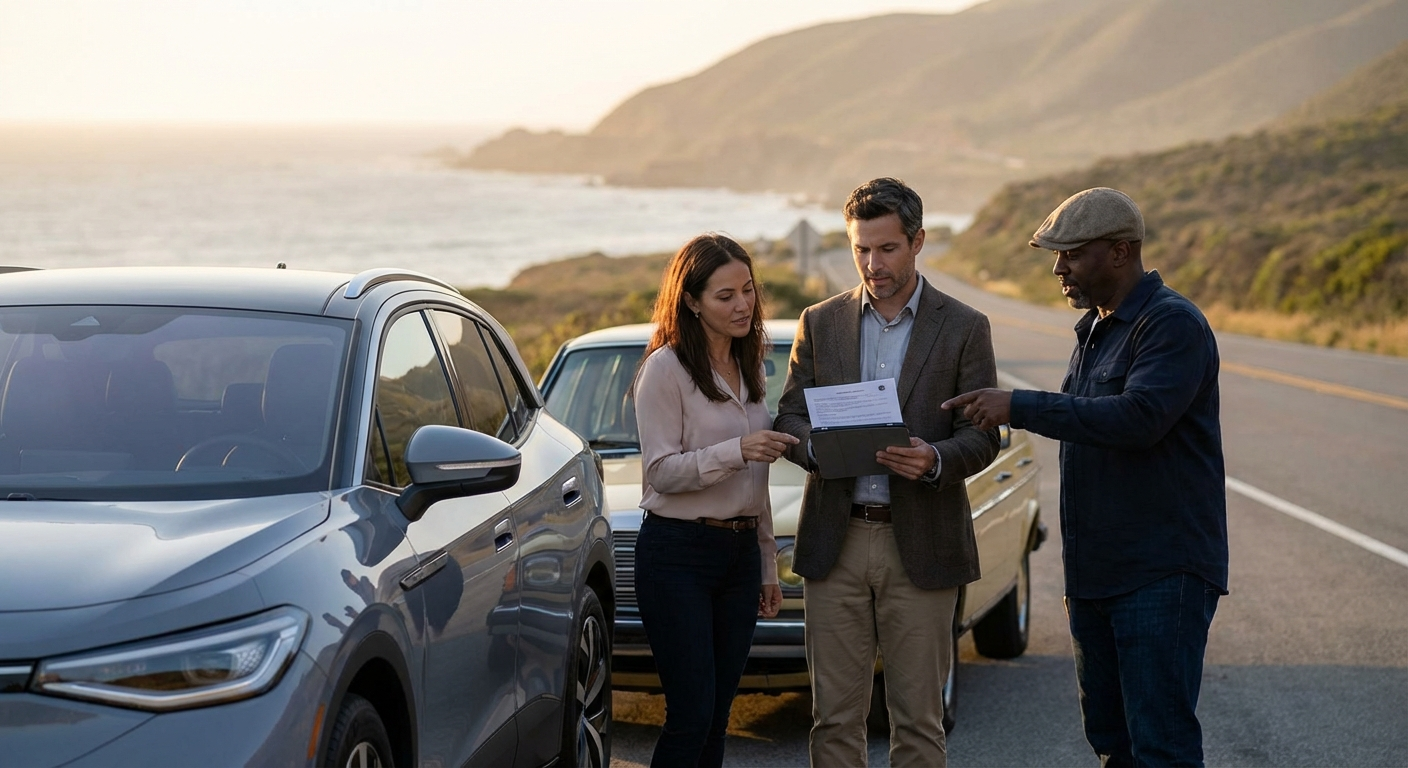
This is a big one in California. Picture this: you’re driving down the Pacific Coast Highway, someone blows a stop sign, hits you, and guess what? They don’t have insurance. Or maybe they only have the state minimums, and your medical bills alone exceed that. UM/UIM coverage protects you in these situations. It pays for your medical bills and property damage when the at-fault driver either has no insurance or not enough of it. Roughly 1 in 7 drivers in California don’t carry insurance, so this isn’t some rare scenario. It’s a smart move.
Collision Coverage
If you hit another car, an object, or roll your vehicle – and it’s your fault – collision coverage pays for the repairs to your own car. If you’ve got a newer car, or one that’s financed, this coverage isn’t just a good idea; it’s practically a must-have. Lenders usually require it.
Comprehensive Coverage
This covers damages to your car that aren’t from a collision. Think about things like theft, vandalism, fire (especially relevant with the threat of wildfires in California), hail, or even hitting an animal. If you wake up one morning and your catalytic converter is gone – a common issue these days – comprehensive coverage is what helps you out.
Medical Payments (MedPay)
MedPay covers medical expenses for you and your passengers, regardless of who caused the accident. It can kick in quickly, helping with emergency room visits or ambulance rides, even if you have health insurance. It’s a nice safety net for those immediate costs.
Rental Car Reimbursement & Roadside Assistance
These are convenience coverages, but boy, can they be helpful. Rental car reimbursement pays for a rental car while yours is being repaired after a covered accident. Roadside assistance covers things like flat tires, dead batteries, or towing – a real lifesaver if you break down on a long drive through the desert or stuck in traffic trying to get out of LA.
How Your Premium is Calculated in California
You might wonder why your neighbor pays less for insurance than you do, even if you drive similar cars. A few things drive your premium up – or down – in California.
Your Driving Record
This is probably the biggest factor. Speeding tickets, at-fault accidents, DUIs – they all tell insurers you’re a higher risk. A clean driving record, on the other hand, can save you a lot of money. Insurers like State Farm, AAA, and Farmers all reward safe drivers.
Where You Live
Believe it or not, your zip code matters. If you live in a densely populated area with high traffic and higher rates of vandalism or theft – say, parts of Los Angeles or Oakland – you’ll likely pay more than someone in a quieter, rural town. The sheer volume of cars on the road in places like the Valley means more chances for accidents.
Your Vehicle
The type of car you drive makes a big difference. Expensive luxury cars cost more to repair. Sports cars might signal a higher risk of speeding. Cars with advanced safety features, however, might get you a discount because they’re less likely to be in severe accidents. Older cars might be cheaper to insure for collision/comprehensive, but parts can be harder to find.
Your Age and Experience
Younger, less experienced drivers typically pay the highest rates. As you get older and gain more driving experience, your rates tend to go down, assuming you maintain a good record. There’s a sweet spot, usually in your 30s to 60s, where rates are often at their lowest.
Your Annual Mileage
Simply put: the less you drive, the less risk you pose. If you work from home or only use your car for short errands, you might qualify for a low-mileage discount. This is becoming more popular as work habits shift.
Smart Ways to Save on Your California Car Insurance
Nobody wants to pay more than they have to. Here are some solid strategies to keep your insurance costs down without sacrificing essential protection:
1. Shop Around, Always
This is probably the single best piece of advice. Don’t just renew with the same company year after year without checking other options. Different insurers have different appetites for risk and different pricing models. What’s a good deal with one company might be expensive with another. This is where an independent agent like Karl Susman can really help. They work with multiple insurance companies to find you the best fit. Ready to see what you could save? Visit California Driver Insurance at https://susmaninsurance.com/get-a-quote/ today.
2. Ask About Discounts
Seriously, ask! Insurers offer all sorts of discounts: good driver, multi-policy (bundling your home and auto insurance), good student, anti-theft devices, defensive driving courses, low mileage, even paying your premium in full. You might be eligible for discounts you don’t even know about.
3. Increase Your Deductible
Your deductible is the amount you pay out of pocket before your insurance kicks in for collision and comprehensive claims. If you raise your deductible from, say, $500 to $1,000, your premium will usually go down. Just make sure you have enough in savings to cover that higher deductible if you need to file a claim.
4. Bundle Your Policies
If you own a home or rent an apartment, combining your auto insurance with your home or renters insurance can often lead to significant savings. Most major insurers offer a multi-policy discount that’s worth exploring.
5. Drive Safely and Maintain a Clean Record
This goes back to the basics, but it’s the most effective long-term strategy. Avoiding accidents and tickets keeps your rates lower year after year. It’s not just about saving money; it’s about staying safe on California’s busy roads.
Getting Help from a California Expert
Trying to sort through all the options and understand the fine print can feel like a maze. That’s why many Californians turn to independent insurance agents. They’re not tied to one company, meaning they can compare policies from various insurers to find coverage that fits your specific needs and budget. They understand the quirks of the California market, from wildfire risks to Proposition 103 regulations.
For personalized advice and to find the right coverage for your needs, reach out to Karl Susman and the team at California Driver Insurance. With CA License #OB75129, Karl has been helping drivers across California make smart insurance choices for years. Get a quote and see the difference an independent agent makes: https://susmaninsurance.com/get-a-quote/.
Frequently Asked Questions About California Car Insurance
Q1: Do California car insurance requirements change often?
Not usually for the minimum liability amounts. Those tend to stay fixed for long periods. However, the cost of insurance and what’s available in the market can change quite a bit year-to-year, based on claims, economic factors, and natural disaster impacts.
Q2: Can I drive without insurance in California?
No, absolutely not. Driving without at least the minimum liability insurance is illegal in California. You could face hefty fines, have your license suspended, and even have your car impounded. It’s just not worth the risk.
Q3: What happens if I get into an accident without insurance?
If you’re found to be at fault, you’ll be personally responsible for all damages and injuries. This means paying out of pocket for repairs to the other driver’s car, their medical bills, and any legal fees. It can quickly lead to financial ruin.
Q4: Does my credit score affect my car insurance rate in California?
No, not directly. California law (specifically Proposition 103) prevents insurers from using credit scores to determine your initial car insurance rates. They can use other factors like your driving record, where you live, and your vehicle type, but credit history isn’t one of them for auto insurance.
Q5: Is it true that some insurers are leaving California?
Yes, some insurers have reduced their presence or stopped writing new policies in California in recent years. This is often due to the rising costs of claims, especially from natural disasters like wildfires, and the state’s regulatory environment. It makes shopping around even more important.
This article is for informational purposes only and does not constitute financial advice.