What You’ll Learn: Leasing a car in California means more than just signing papers. You’ll discover the specific insurance coverages your lessor demands, why they’re different from standard state minimums, and how to get the right policy without a headache. We’ll walk through the steps, from reading your lease agreement to understanding gap insurance, so you’re ready for the road ahead.
Understanding California’s Minimum Car Insurance Rules
Driving anywhere in California, whether it’s the bustling streets of Los Angeles or the quiet roads of Ventura County, means you need car insurance. That’s not really a secret. The state sets minimum liability limits to protect others if you cause an accident.
Specifically, you’re looking at 15/30/5. That breaks down to $15,000 for bodily injury liability for one person injured in an accident, $30,000 for bodily injury liability for all persons injured in an accident, and $5,000 for property damage liability. These numbers are the absolute floor.
Honestly, those minimums are pretty low. A fender bender on the 405 could easily exceed $5,000 in property damage. A trip to the ER after a collision? That $15,000 won’t go far. For most drivers, even those who own their cars outright, these state minimums are simply not enough protection.
But here’s the thing: when you lease a car, those state minimums are almost never acceptable. Your lessor — the company you’re leasing the car from — has a much bigger stake in the vehicle than you do. They own it, after all. And they’re going to want to make sure their investment is well-protected.
Why Leased Cars Demand More Coverage
Think about it like this: if you buy a car and finance it, the bank wants certain coverages. If you lease, the lessor wants even more. They’re not just worried about you paying your monthly bill; they’re worried about the car itself. If it gets crunched, stolen, or totaled, they’re on the hook for its value.
That’s why lease agreements come with their own specific insurance requirements. These almost always go way beyond California’s basic 15/30/5 liability. What do they usually ask for?
- Higher Liability Limits: Expect to see demands for something like 100/300/50 or even 250/500/100. That means $100,000 for one person’s injuries, $300,000 for all injuries, and $50,000 for property damage. Big difference.
- Collision Coverage: This pays to repair your leased car if it’s damaged in an accident, regardless of who’s at fault. Lessors nearly always require this. They’ll also specify a deductible — often $500 or $1,000.
- Comprehensive Coverage: This covers damage to your car from things like theft, vandalism, fire (a real concern with the brush fires in Southern California), hail, or hitting an animal. Again, a deductible will apply, usually matching your collision deductible.
- Gap Insurance: This one is often mandatory or very, very strongly recommended. We’ll get into why it’s so important in a bit.
- Lessor as “Additional Insured” or “Loss Payee”: Your lease company will need to be listed on your policy. This means if something happens to the car, they’re directly notified and paid out for their interest in the vehicle.
Ignoring these requirements isn’t an option. The lease agreement is a contract, and insurance is a big part of it. Fail to meet the terms, and you’ll find yourself in a bind.
Step 1: Get Your Lease Agreement Details
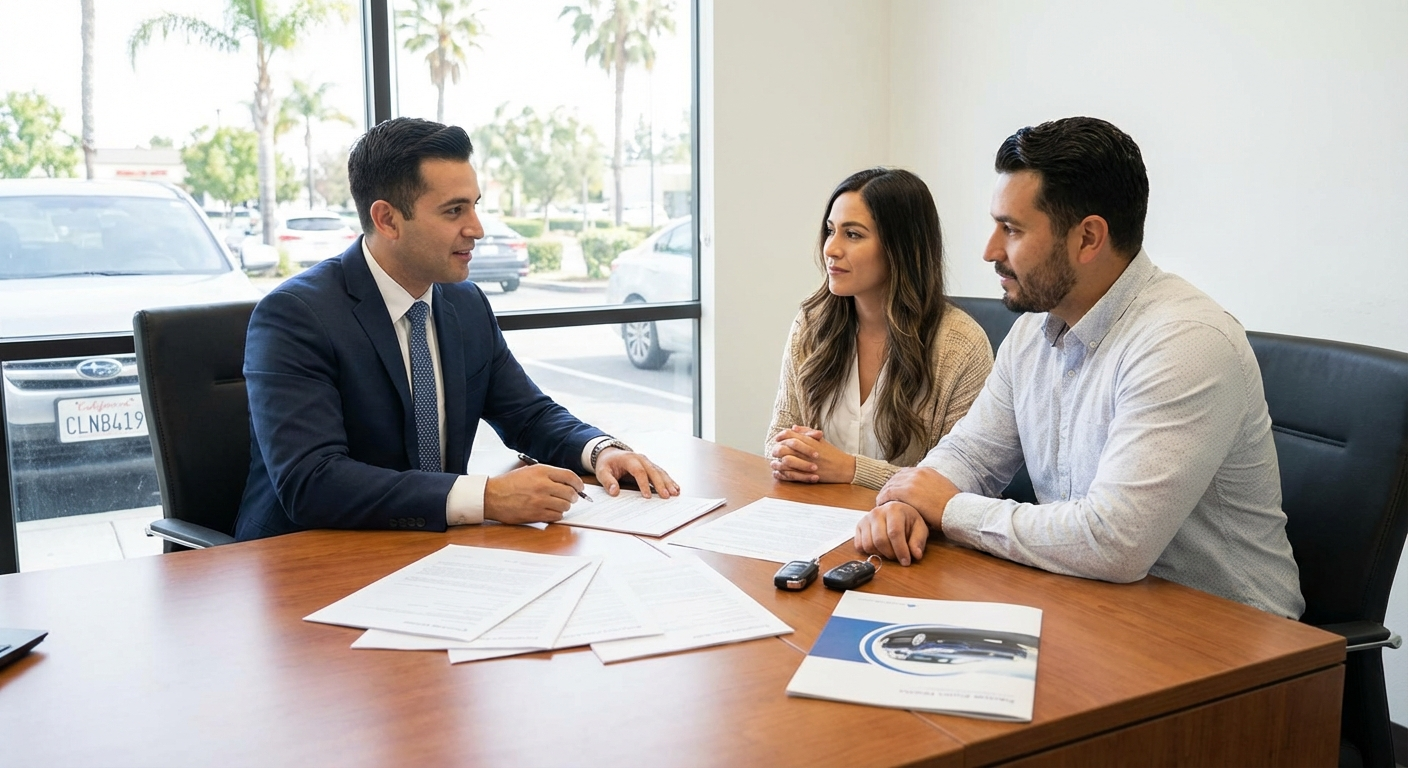
Before you even start calling insurance companies, grab your lease agreement. Seriously, don’t skip this. It’s the most important document you have for understanding what your lessor expects.
Look for the section on insurance requirements. It’ll spell out the exact liability limits, deductibles for collision and comprehensive, and whether gap insurance is a must-have. You’re looking for specific numbers, not vague promises. Write them down. You’ll need them when you talk to an agent or get online quotes.
Many people try to guess or assume. That’s a mistake. A few years back, a client in the Inland Empire leased a new SUV, assuming her existing policy would be fine. It wasn’t. Her lessor required higher limits and she had to scramble to update her coverage, paying more than she expected.
Step 2: Know Your Coverage Options for Leased Cars
Once you know what your lessor demands, it’s time to understand what each type of coverage really does. This isn’t just about checking boxes; it’s about protecting yourself and the car.
Liability Coverage: Protecting Others
This is the foundation. It pays for injuries and property damage you cause to others in an accident. If your lessor asks for 100/300/50, that’s what you need. Going higher is often a smart move, especially in California where repair costs and medical bills can skyrocket. Imagine hitting a brand-new Tesla. The property damage alone could easily exceed $50,000.
Collision Coverage: Repairing Your Car After an Accident
If you back into a pole, get T-boned in a parking lot, or have any other kind of accident, collision coverage pays for the repairs to your leased vehicle. You pick a deductible — the amount you pay out of pocket before the insurance kicks in. Common deductibles are $500 or $1,000. A lower deductible means higher premiums, but less out-of-pocket if you have a claim. Your lessor will likely specify a maximum deductible they’ll allow.
Comprehensive Coverage: Everything Else
This is for damage that isn’t from a collision. Think of the wildfires that sweep through parts of California, like the 2025 LA fires. If your car gets damaged by smoke, falling trees, or even stolen from your driveway, comprehensive coverage helps. It also covers things like vandalism, hail, or hitting a deer in the rural parts of the state. Again, a deductible applies here, usually the same as your collision deductible.
Gap Insurance: The Silent Hero
Here’s where it gets interesting. Gap insurance is probably the most overlooked but essential coverage for a leased car. When you lease a new car, it starts losing value the moment you drive it off the lot. This is called depreciation. If your leased car is totaled or stolen, your standard collision and comprehensive coverage will pay out its actual cash value at the time of the loss.
But wait — the amount you still owe on the lease (the “payoff amount”) might be much higher than the car’s actual cash value. That difference? That’s the “gap.” Gap insurance covers that gap. Without it, you could be on the hook for thousands of dollars out of your own pocket for a car you no longer have.
For example, you lease a car for $30,000. Six months later, it’s totaled. The insurance company says it’s now only worth $25,000. But your lease payoff is still $28,000. That $3,000 difference is what gap insurance would cover. It’s a lifesaver, especially with how quickly cars depreciate. Many lessors make it mandatory, or you can often buy it through the dealership or your insurance provider.
Step 3: Finding the Right Policy
Don’t just jump at the first quote you get. Insurance rates in California can vary wildly between companies, even for the same coverage. Your driving record, where you live (think high-theft areas versus quiet suburbs), and even your credit score can influence your premium. Prop 103, a California law, does protect consumers, but rates still climb due to rising repair costs and increased claims frequency.
Start by getting quotes from several different insurance companies. Think about major players like State Farm, AAA, Farmers, or Progressive. Each one might offer different rates and discounts. An independent insurance agent can be a real asset here.
Someone like Karl Susman at California Driver Insurance, CA License #OB75129, has access to multiple carriers. He can shop around for you, comparing policies and prices to find one that meets your lease requirements and fits your budget. You can reach his agency at (877) 411-5200. It’s like having a personal shopper for insurance, without the extra cost.
When you’re comparing, make sure you’re looking at identical coverage limits and deductibles. An apples-to-apples comparison is the only way to truly see who offers the best deal. Don’t forget to ask about discounts you might qualify for, like multi-car discounts, good driver discounts, or even discounts for certain professions.
Ready to see what you could save on your leased car insurance? Get a quote today!
Step 4: Providing Proof to Your Lessor
Once you’ve picked your policy and paid your first premium, you’ll get a Certificate of Insurance. This is the document your lessor needs. It shows proof that you have the required coverage. Make sure the lessor’s name is correctly listed as an “additional insured” or “loss payee” on this certificate.
Your insurance company should send this directly to the lessor, but it’s always smart to double-check and keep a copy for yourself. Missing this step can lead to your lessor forcing their own, often more expensive, insurance on you.
Step 5: Maintaining Your Policy
This isn’t a one-and-done deal. Your insurance policy needs to stay active for the entire duration of your lease. Don’t let it lapse! If your policy cancels for any reason, your lessor will find out. They have systems in place to monitor this.
What happens then? They’ll likely buy insurance for you, often called “force-placed” insurance. This coverage protects their interest in the car, but it’s usually much more expensive than what you’d find on your own, and it often provides minimal protection for you. The cost will be added to your monthly lease payment, sometimes with penalties.
It’s also a good idea to review your policy annually. Your driving habits might change, new discounts could become available, or your personal circumstances could shift. A quick check-in with your agent, like Karl Susman, can ensure you’re still getting the best value and appropriate coverage.
What Happens If You Don’t Meet Lease Insurance Requirements?
Ignoring the insurance requirements in your lease agreement is a serious misstep. First, as mentioned, your lessor will likely force-place insurance on you. This isn’t just expensive; it’s often bare-bones coverage that only protects the lessor, not you. You’ll still be liable for any damages that exceed their policy limits, and you’ll be paying a premium for minimal personal benefit.
Beyond that, it’s a breach of contract. Depending on the terms of your lease, this could lead to penalties, fees, or even the lessor having the right to repossess the vehicle. Nobody wants that. It can also ding your credit score, making it harder to lease or finance a car in the future.
The smartest play is always to comply fully and keep your insurance current. It protects you, protects the lessor, and keeps your lease agreement in good standing.
FAQ
Can I use my existing insurance for a lease?
You probably can, but you’ll almost certainly need to modify it. Your current policy might not meet the higher liability limits, collision/comprehensive deductibles, or gap insurance requirements of your lease agreement. Talk to your insurance agent to update your existing policy to meet the lessor’s demands.
Is gap insurance always required for a lease?
Not always, but it’s very common. Many lessors make it mandatory due to the immediate depreciation of new vehicles. Even if it’s not required, it’s highly recommended. Without it, you could face a significant financial loss if your leased car is totaled or stolen.
What if my lease requirements change?
Lease requirements generally don’t change mid-lease. However, if you extend your lease or sign a new one, the terms might be different. Your insurance needs to match the most current lease agreement. Always read the fine print of any new contract.
Why is California car insurance so expensive for a lease?
California car insurance rates, in general, are higher than in many other states. This is due to several factors: high population density leading to more accidents, expensive repair costs, a high rate of vehicle theft in areas like Los Angeles, and the increasing frequency of natural disasters like wildfires. For leased cars, the higher coverage requirements (like 100/300/50 liability and mandatory comprehensive/collision) naturally lead to higher premiums than the state minimums. It’s simply more protection, which costs more. The rising cost of parts and labor, coupled with increased litigation, also pushes rates up, even with Prop 103’s consumer protections.
Getting the right car insurance for your leased vehicle in California doesn’t have to be a confusing ordeal. With a clear understanding of your lease agreement and a bit of help, you can drive with confidence, knowing you’re fully protected.
Still have questions about your lease insurance requirements or need a quote that meets your lessor’s demands? Don’t hesitate to reach out. Karl Susman at California Driver Insurance, CA License #OB75129, is ready to help you find the perfect policy. Give us a call at (877) 411-5200 or get a quote online.
This article is for informational purposes only and does not constitute financial advice.