California’s Insurance Maze: Finding Savings for Your Family’s Cars
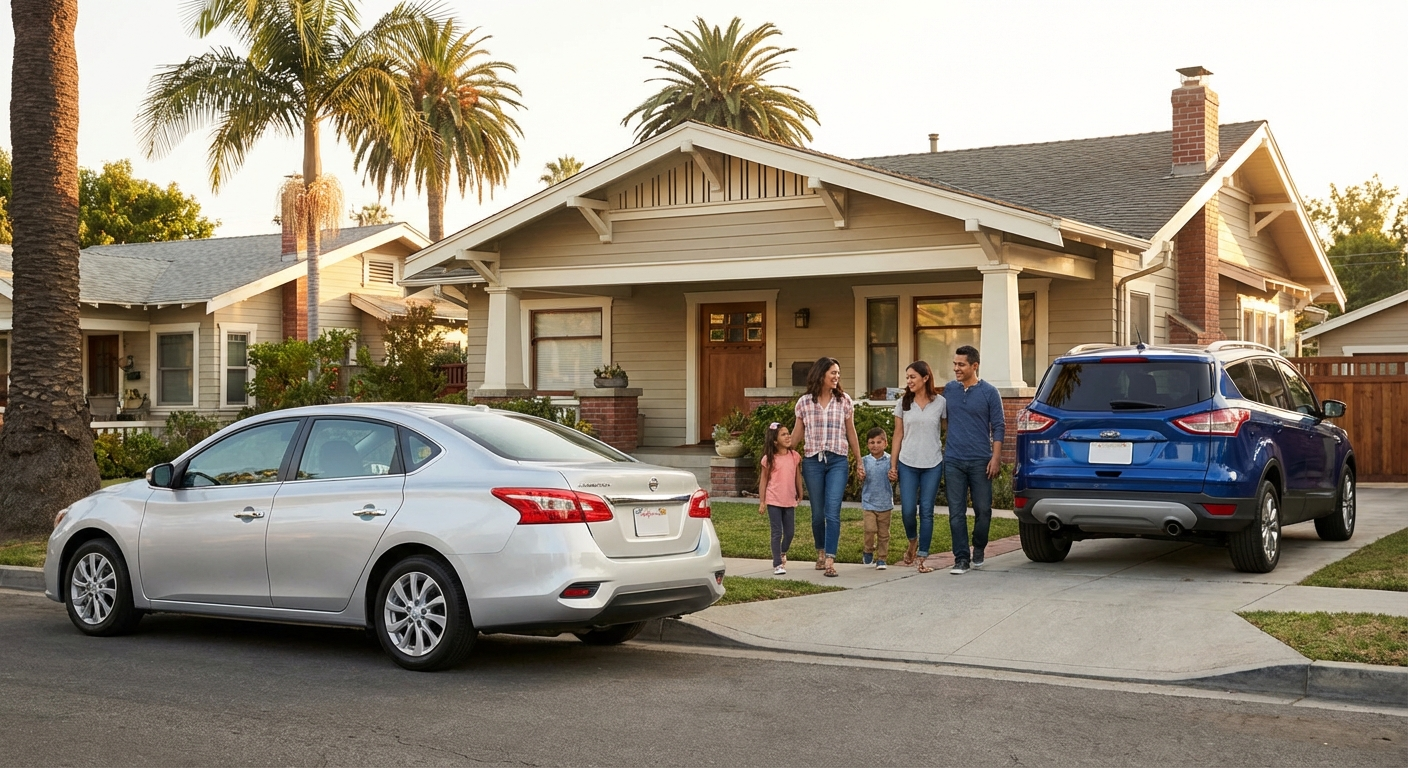
Imagine the Millers, a family living just outside Thousand Oaks in Ventura County. Sarah commutes daily to her job in Westlake Village in her trusty Honda Civic. Her husband, Tom, drives their older Toyota Highlander, perfect for hauling the kids to soccer practice and weekend trips up the coast. For years, they’d just renewed their auto insurance without much thought. But lately, the renewal notices felt like a punch to the gut. Premiums seemed to climb faster than the hills during a wildfire season. “Honestly,” Sarah sighed one evening, tossing another bill onto the kitchen table, “it feels like we’re being punished just for living here. Two cars, two drivers, and the cost keeps going up.”
Her frustration isn’t unique. California drivers have seen premiums jump, sometimes by 30% or 40% between 2022 and 2024, especially in areas hit by fires or with heavy traffic. It’s a tough climate, no doubt. Insurers have pulled back, and finding good rates can feel like a scavenger hunt. But here’s the thing: many folks with multiple cars miss one of the simplest, most consistent ways to shave a significant chunk off those ever-growing bills: the multi-car discount.
What’s the Deal with Multi-Car Discounts?
It sounds simple, right? Insure more than one vehicle with the same company, and they give you a break. The short answer is yes. The real answer is more complicated, especially in California. For most insurers, it’s about bundling risk. When they insure two or three or even four cars for the same household, they see it as a more stable client. It’s often a sign of loyalty, and frankly, it simplifies their paperwork.
So, instead of two separate policies, each with its own administrative costs and underwriting process, they get one big policy. That efficiency often translates into savings for you. Think of it like buying in bulk at Costco – the unit price goes down. Insurers like State Farm, AAA, and Farmers all offer these kinds of discounts, though the exact percentage can vary wildly. Some might give you a modest 10% off the total premium, while others could push it closer to 25%. A big difference, right?

Are You Even Eligible? What Insurers Look For
Getting that multi-car discount isn’t just about having two sets of keys in your junk drawer. Insurers have some pretty clear rules.
First, *all the vehicles usually need to be registered at the same address*. This isn’t always a hard and fast rule, but it’s the most common starting point. If Sarah’s Civic is registered in Thousand Oaks and Tom’s Highlander is registered at his old apartment in Sherman Oaks, that’s probably not going to fly.
Second, *the drivers on the policy usually need to live in the same household and be related or married*. This makes sense. Insurers want to know exactly who’s driving what and where. If the Millers’ oldest daughter, who’s away at UCLA, has her own car, she might be eligible to be added to their policy as a driver, but her car might need its own policy if it’s registered separately. It’s all about shared risk and shared residence.
Third, *all cars must be on the same policy*. You can’t have your Civic with one company and your Highlander with another and expect a discount from either. This is the whole point of bundling.
Sometimes, folks worry about mixed ownership. What if one car is leased and the other is owned outright? Or one is financed and the other is paid off? Doesn’t matter. As long as they’re under the same household umbrella and meet the other criteria, you’re usually good to go.
The California Twist: Why Discounts Matter More Here
Honestly, California’s insurance market is… unique. Wildfires, like those we expect to see more of in 2025 across the LA foothills, drive up property insurance costs, which in turn can pressure auto insurers. Then there’s Proposition 103, passed way back in 1988, which gives the state Department of Insurance strong regulatory power over rates. This means insurers can’t just hike prices willy-nilly; they have to justify every increase. While Prop 103 protects consumers from arbitrary price hikes, it also means insurers are very precise about how they offer discounts.
For example, your driving record weighs heavily in California. A clean record will always get you better rates, discount or no discount. But adding a second car to a policy with a clean driver can really amplify those savings. If you’ve got a couple of drivers with less-than-perfect records – maybe a speeding ticket or two – the discount might still apply, but the overall premium will naturally be higher.
Which brings up something most people miss: The multi-car discount isn’t a fixed dollar amount. It’s a percentage off your total premium. So, if your base premium is high because you live in a ZIP code with high theft rates, say, parts of the Inland Empire, that 15% discount will be a bigger dollar amount than if you live in a quieter part of Marin County. It’s all relative.
Beyond the Basics: Other Factors and Finding the Right Fit
Even with a multi-car discount, your premium isn’t just about how many vehicles you have. Other things play a part:
* **Your ZIP Code:** Living in a densely populated area like downtown San Diego versus a more rural spot in Sonoma County makes a difference. More traffic, more accidents.
* **Your Driving Record:** We talked about this. Clean drivers get the best deals.
* **The Cars Themselves:** A brand-new Tesla will cost more to insure than an older Nissan Versa. Fancy cars are more expensive to repair and more attractive to thieves.
* **Coverage Levels:** Carrying basic liability versus full coverage with comprehensive and collision makes a huge impact.
The Millers, after looking at their options, realized they hadn’t really shopped around in years. They’d just stuck with their current company out of habit. Tom had heard his buddy down in Orange County rave about a multi-policy discount – bundling home and auto insurance together. That’s another big one, often stacking on top of the multi-car savings.
“It’s not just about getting the discount,” Sarah told Tom, “it’s about finding an insurer that actually *wants* our business and offers competitive rates for our situation.” And that’s exactly it. Some companies are more aggressive with their multi-car discounts than others. It’s not a one-size-fits-all world.
This is where an independent agent can really help. Someone like Karl Susman, from California Driver Insurance (CA License #OB75129), doesn’t work for just one company. He works with many. He can compare rates and discounts from different insurers – State Farm, Progressive, Mercury, you name it – to see who’s offering the best deal for a family like the Millers, with their two cars and specific driving history. He’s seen all the changes in the California market and knows how to make those discounts work hardest for you.
When you’re ready to see what kind of savings you can uncover, it’s a good idea to chat with someone who understands the nuances of California’s insurance landscape. Don’t just settle for what you’ve got.
Ready to explore your options for a multi-car discount in California? Get a quick, no-obligation quote today and see what you could save: https://californiadriverinsurance.com/quote/
Frequently Asked Questions About California Multi-Car Discounts
Can I get a multi-car discount if one of my cars is a classic car or RV?
Often, yes, but it depends on the insurer. Many companies will allow you to include specialty vehicles like classic cars or RVs on a multi-car policy, but sometimes they might require a separate policy for certain types of vehicles due to their unique risks. It’s always best to check directly with the insurance provider or an agent like Karl Susman.
Do all insurance companies offer the same multi-car discount percentage?
Not at all. The percentage can vary significantly from one insurer to another. Some might offer a modest 5-10%, while others might go as high as 25% or even more on the base premium. This is why shopping around and comparing quotes from different companies is so important.
What if I add a new driver to my multi-car policy, like a teenage child? Will that affect the discount?
Adding a new driver, especially a young or inexperienced one, will almost certainly increase your overall premium. Young drivers are considered higher risk. However, the multi-car discount itself will likely still apply to the combined premium for all vehicles. The discount helps offset some of that increased cost, but it won’t erase it entirely.
Is the multi-car discount automatically applied, or do I need to ask for it?
Many insurers will automatically apply the discount when you add a second vehicle to your policy. However, it’s always a good idea to confirm with your insurance company or agent to make sure you’re getting all the discounts you’re eligible for. Sometimes, a quick chat can uncover other savings you might have missed.
If I move to a different part of California, will my multi-car discount change?
Your multi-car discount percentage itself might not change, but the total dollar amount you save will be affected. Moving to a new ZIP code can drastically change your base premium – up or down – due to factors like local accident rates, theft rates, and population density. Since the discount is usually a percentage of your premium, a higher or lower base premium means a higher or lower discount in real dollars.
Curious about how much you could save by combining your vehicles on one policy? It’s easier than you think to find out.
Get your personalized quote right here: https://californiadriverinsurance.com/quote/
This article is for informational purposes only and does not constitute financial advice.