
Driving for Dollars? What Your Personal Auto Policy Probably Misses
You’ve thought about it, haven’t you? Or maybe you’re already doing it: picking up passengers, delivering food, or ferrying packages around California. It’s an attractive way to make some extra cash, especially with gas prices doing what they do. You’ve got your car, your smartphone, and a little free time. What could go wrong?
Well, here’s where it gets interesting. While the gig economy offers amazing flexibility, it also creates a surprisingly big blind spot in most drivers’ personal auto insurance policies. Many folks assume their regular insurance will cover them no matter what they’re doing with their car. Not always. Actually, for rideshare and delivery drivers, that assumption can lead to a financial nightmare.
Think about it this way: your personal policy is designed for *your* driving – commuting to work, grocery runs, weekend trips up to Lake Tahoe. It’s not built for commercial activity. When you start accepting money to transport people or goods, you’re essentially running a business, even if it’s just part-time. And insurance companies draw a very sharp line between personal use and business use. Cross that line without the right coverage, and you’re driving without a safety net.
The “Three Phases” of Rideshare Coverage (and Where You’re Exposed)
To truly understand this, we need to talk about the “phases” of a rideshare driver’s day. It’s not as simple as “on” or “off.” There are distinct periods, and each one has different insurance implications.
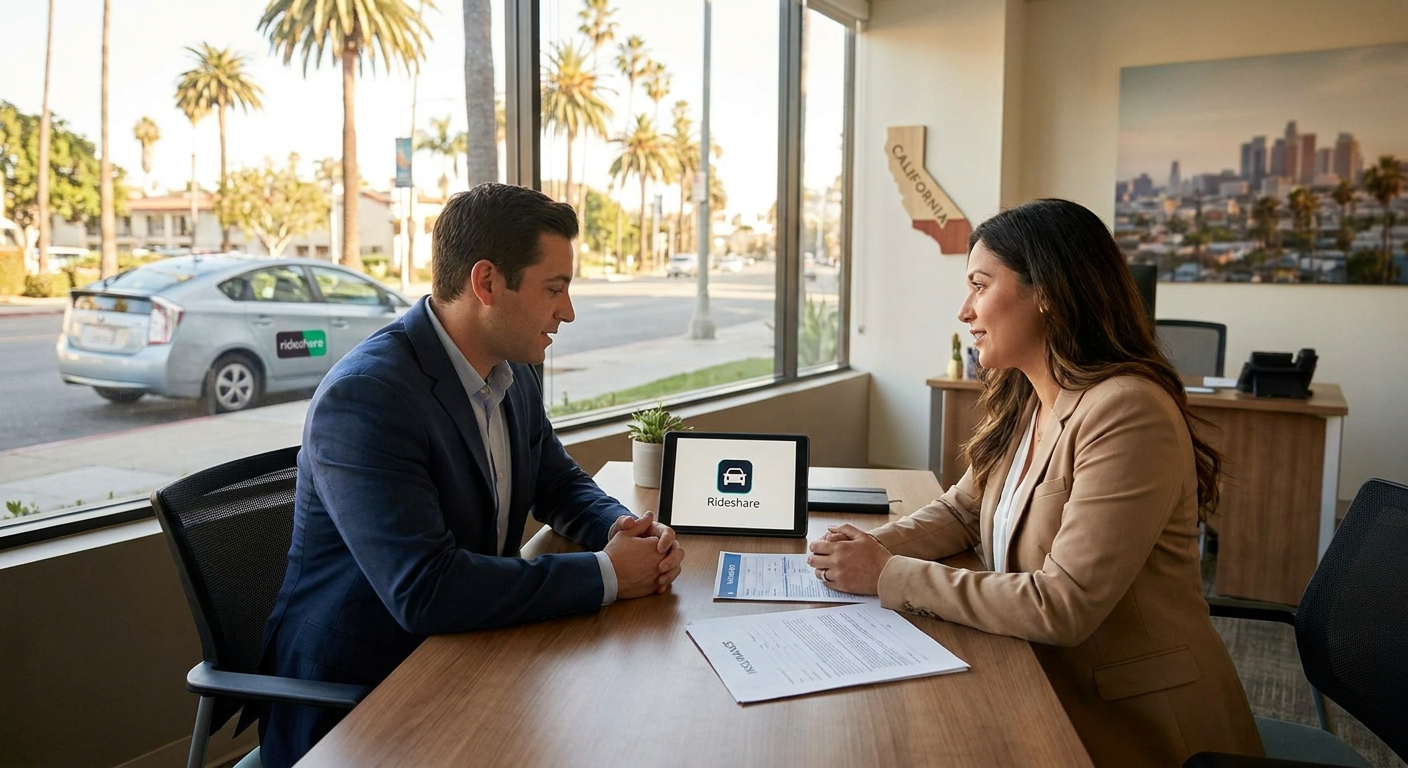
Phase 0: App Off, Just Driving
This is the easiest one. Your rideshare app is off. You’re not looking for passengers or deliveries. You’re just driving your car, maybe heading to the beach in Ventura County or running errands in the Valley. During this time, your personal auto insurance policy is exactly where it should be – fully in effect. If you get into an accident, your policy handles it just like any other personal trip. No problem here.
Phase 1: App On, Waiting for a Match
Now, this is the big danger zone. You’ve logged into the rideshare app. You’re actively waiting for a passenger request or a delivery order to come through. Your phone might be mounted on your dash, ready to ping. You haven’t accepted a trip yet, but you’re available.
Most personal auto policies *do not* cover you during this phase. They see the app being on as a clear indication of commercial activity. If you have an accident while waiting for a request, your personal insurer will likely deny your claim. They’ll say, “Sorry, you were using your vehicle for business.”
But wait — aren’t the rideshare companies supposed to cover you then? Yes, but their coverage during Phase 1 is often quite limited. We’re talking about basic liability coverage, typically around $50,000 to $100,000 for bodily injury and property damage. That sounds like a lot until you consider a serious accident on the 405. Worse, this company coverage usually doesn’t include physical damage to *your* car. So, if you hit a pole while cruising around the Inland Empire waiting for a ping, you could be on the hook for thousands in repairs, out of your own pocket. Big difference.
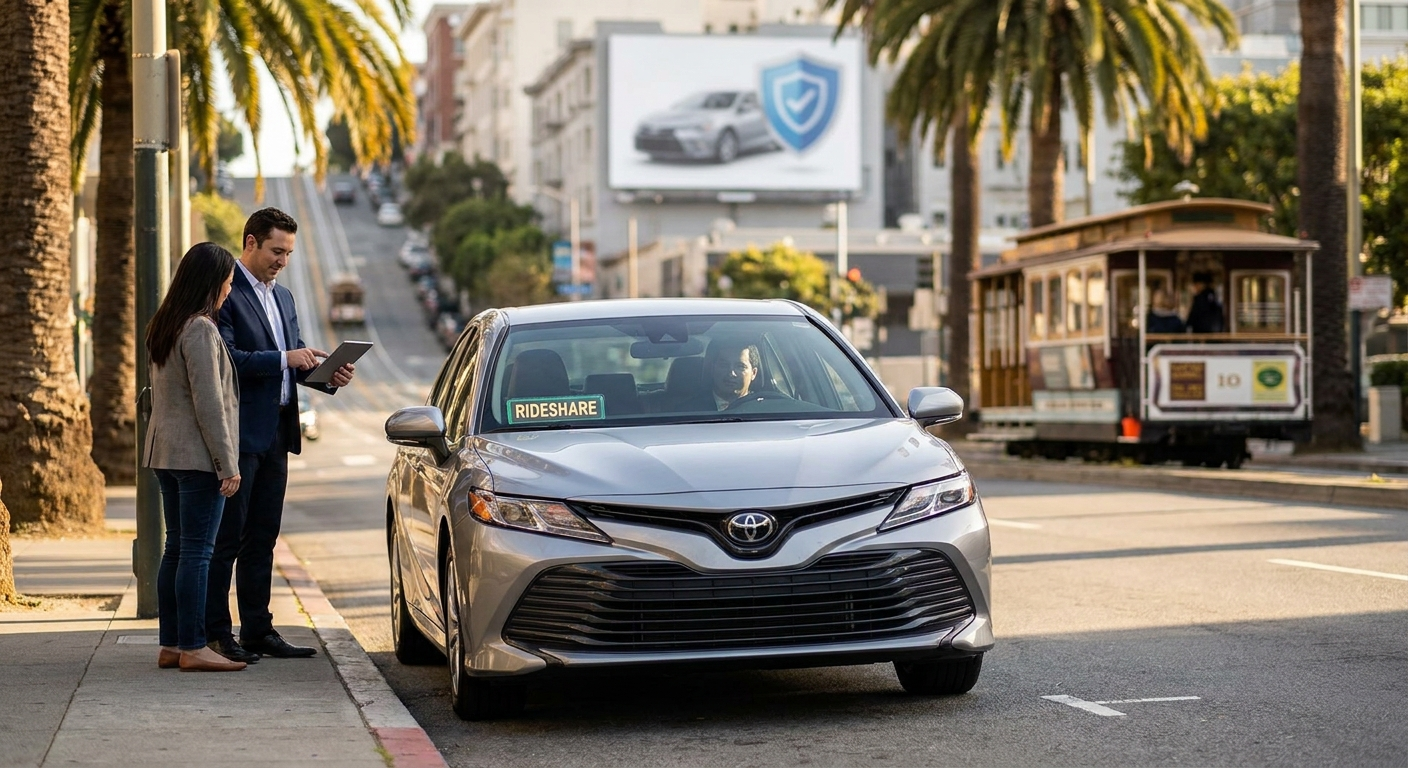
Phase 2: Matched with a Rider, On the Way to Pick Up or During the Ride
Okay, good news here. Once you’ve accepted a ride or delivery request, and you’re either on your way to pick up the passenger or actively transporting them, the rideshare company’s commercial insurance policy kicks in with much more robust coverage. This usually includes higher liability limits – often $1 million – and often includes contingent collision and comprehensive coverage for your vehicle, assuming you already carry those on your personal policy.
This is a much better place to be, insurance-wise. The problem, though, is that deductible. Sometimes it’s $1,000, sometimes $2,500. That’s a chunk of change you’d still have to pay if your car gets damaged. But at least the major financial catastrophe of not having *any* coverage is largely avoided during Phase 2. The trick is getting safely *to* Phase 2.
Bridging the Gap: Rideshare Endorsements and Policies
So, what’s a California rideshare driver to do? You don’t want to drive around exposed, especially not in a state where repair costs and medical bills can skyrocket after an accident. The answer lies in a specific type of coverage designed to bridge that dangerous Phase 1 gap: a rideshare endorsement or a specialized rideshare policy.
A rideshare endorsement is an add-on to your existing personal auto policy. It essentially tells your personal insurer, “Hey, I’m doing rideshare, but please cover me during that gray area when the app’s on but I haven’t accepted a trip yet.” It extends your personal policy’s protection, including liability, collision, and comprehensive, into Phase 1. This means you’d have the same coverage limits and deductible you chose for your personal policy. That’s a huge relief.
Finding this kind of coverage has gotten easier over the last few years. Insurers like State Farm, Farmers, Mercury, and Progressive often offer these endorsements in California. Even AAA, which historically was a bit more conservative, has options. The cost? It’s often less than you might imagine. We’re not talking about doubling your premium. Sometimes it’s an extra $10 to $30 a month, depending on your location – whether you’re in a busy area like downtown San Francisco or a quieter spot in Orange County – your driving record, and the specific insurer. That’s a small price for real peace of mind.
What Happens If You Don’t Have It? A California Story.
Let’s paint a picture. Imagine you’re driving for a rideshare company in, say, Riverside. It’s a Tuesday afternoon. You’ve got the app on, waiting for a ping. You’re just pulling out of a coffee shop parking lot, checking your phone for a request, when someone backs out of a spot right into your passenger door. Not a massive crash, but enough to dent your car, smash a window, and leave you with some whiplash.
You call your personal auto insurer. They ask what you were doing. “Oh, I had the rideshare app on, just waiting for a customer,” you explain. And then comes the bad news: “Sorry, your policy excludes commercial use. Claim denied.”
Next, you call the rideshare company’s insurance. They say, “You hadn’t accepted a trip yet, so our full commercial coverage wasn’t in effect. We only offer limited liability for Phase 1, and it doesn’t cover damage to your vehicle.”
So, what now? You’ve got a damaged car. You’re hurt. You’re out of work while your car is in the shop. You’re responsible for your own medical bills (beyond what your health insurance covers) and all the repair costs. Maybe you even hit someone else, and their car needs fixing too. You’re suddenly looking at thousands, maybe tens of thousands of dollars, coming straight from your bank account. It’s a devastating hit that could have been avoided.
This isn’t some hypothetical nightmare. It happens to California drivers all the time. Our state’s consumer protection laws, like Prop 103, have done a lot to keep insurance fair, but they can’t magically create coverage where it doesn’t exist. The onus is on you, the driver, to make sure you’re properly covered for the specific risks you take on.
Finding the Right Fit for Your Drive
Choosing the right rideshare coverage isn’t just about avoiding a denied claim. It’s about protecting your livelihood, your vehicle, and your financial future. You need to think beyond just liability. What about collision and comprehensive coverage for your own car? What if an uninsured motorist hits you while you’re waiting for a ride? These are all important questions.
That’s why it’s so important to talk to someone who really understands the California insurance market. Someone who can explain the nuances and help you find a policy that fits your specific needs without breaking the bank. Karl Susman, from California Driver Insurance, is exactly that kind of expert. He’s seen firsthand how these situations play out and can guide you through the process. His agency, with CA License #0B75129, specializes in making sure California drivers are truly protected.
Don’t guess when it comes to your insurance. Don’t assume. A quick conversation could save you a world of trouble down the road.
Ready to see what options are out there for you? Get a California rideshare insurance quote today.
FAQ: Your Rideshare Insurance Questions Answered
Does my personal auto policy cover me if I’m driving for a rideshare company?
Honestly, almost certainly not for periods when you’re actively logged into the app and waiting for a ride request. Your personal policy covers personal use, not commercial activity.
What’s the difference between a rideshare endorsement and a separate commercial policy?
A rideshare endorsement is an add-on to your personal policy that extends its coverage to the “app on, no passenger” phase. A separate commercial policy is usually much more expensive and is designed for full-time commercial drivers, not typically part-time rideshare. Most rideshare drivers need the endorsement, not a full commercial policy.
How much does rideshare insurance cost in California?
It varies a lot based on your location (driving in a crowded city like Los Angeles versus a smaller town), your driving record, and the specific insurer. Generally, an endorsement might add anywhere from $10 to $30 a month to your premium. It’s usually quite affordable for the peace of mind it offers.
What if the rideshare company says they provide insurance?
They do, but it’s not always enough. Their coverage kicks in fully once you’ve accepted a ride or during the ride itself (Phase 2). During the risky “app on, waiting” phase (Phase 1), their coverage is typically very limited, often just basic liability, and usually doesn’t cover damage to your own car. That’s why you need your own gap coverage.
Will my insurance company cancel my policy if they find out I’m ridesharing?
They might. If you don’t inform them and you file a claim related to ridesharing, they could deny the claim and then cancel your policy for misrepresentation of risk. That’s why it’s so important to be upfront and get the proper endorsement.
Don’t let a misunderstanding about insurance turn your side hustle into a financial setback. Protecting yourself properly means understanding these nuances and making an informed choice. It’s always best to chat with an expert.
If you’re driving for a rideshare company in California, or even thinking about it, you really owe it to yourself to get clear on your coverage. Reach out for a California rideshare insurance quote and make sure you’re truly protected on every drive.
This article is for informational purposes only and does not constitute financial advice.