
Everyone Talks About Accident Forgiveness. What Is It, Really?
Many people think “accident forgiveness” means you can crash your car, shrug, and your insurance company will just pretend it never happened. Not always.
The short answer is yes, it’s a real thing. The real answer is more complicated, especially in California.
At its core, accident forgiveness is a policy add-on or a loyalty perk offered by some auto insurance companies. It’s designed to protect your rates from increasing after your *first* at-fault accident. Imagine you’re driving along the Pacific Coast Highway, maybe a little distracted by the ocean view, and you have a minor fender bender. If you have accident forgiveness, your premium *might not* jump because of that one incident.
But here’s the thing: it’s not a state mandate. Insurers aren’t forced to offer it. It’s a competitive feature, a way for them to keep good drivers happy. It’s also definitely not a free pass for reckless driving or repeat offenses. You get one shot, usually, and then the clock resets.
So, Is Accident Forgiveness Even a Thing in California?
Absolutely, it is. But it’s not universal, and it comes with strings attached.
In California, the rules for auto insurance are pretty specific, thanks to Proposition 103. This law means your driving record, how many miles you drive, and how many years you’ve been driving are the big factors determining your rates. Not just your ZIP code, like in some other states.
Accident forgiveness, then, acts as a kind of buffer against those Prop 103 rules for a single incident. It’s a benefit some insurers, like State Farm, AAA, and Farmers, offer to their long-term, claim-free customers. It’s usually seen as a reward for loyalty and good driving habits, not something you automatically get with your first policy.

How Do I Get Accident Forgiveness? It Sounds Too Good.
You’re right to be a little skeptical. It’s not handed out like candy. To qualify, you generally need to meet specific criteria set by your insurance company.
For most insurers, this means maintaining a clean driving record for a certain period—often three to five years, sometimes even longer. You can’t have any at-fault accidents or major violations like DUIs. Some companies might require you to be a policyholder for a minimum number of years before you’re eligible. Sometimes, you have to actively *purchase* it as an extra rider on your policy, which means your initial premium will be a little higher.
It’s rarely something a brand-new driver, fresh out of the DMV in the Inland Empire, would qualify for right away. This perk is designed for drivers who’ve proven they’re responsible behind the wheel, making it less of a “too good to be true” scenario and more of a “you earned it” benefit.
Is It Truly “Forgiveness”? Or Just a Delay?
This is where most people get tripped up. The word “forgiveness” can be misleading.
It’s not a magical eraser. Your at-fault accident *still goes on your driving record*. It’s a public record, visible to other insurance companies. What accident forgiveness *does* is prevent your *current* insurer from increasing your rates because of that specific incident. They forgive the surcharge, not the event itself.
But wait — here’s where it gets interesting. If you decide to shop around for new insurance after using your accident forgiveness, the new companies *will* see that accident on your record. And they *will* rate you for it. Big difference.
So, while your rates with your current company might stay stable, moving to a new provider could still mean higher premiums. This is something Karl Susman at California Driver Insurance, CA License #0B75129, often explains to clients. Understanding this distinction is absolutely key when considering the value of accident forgiveness.
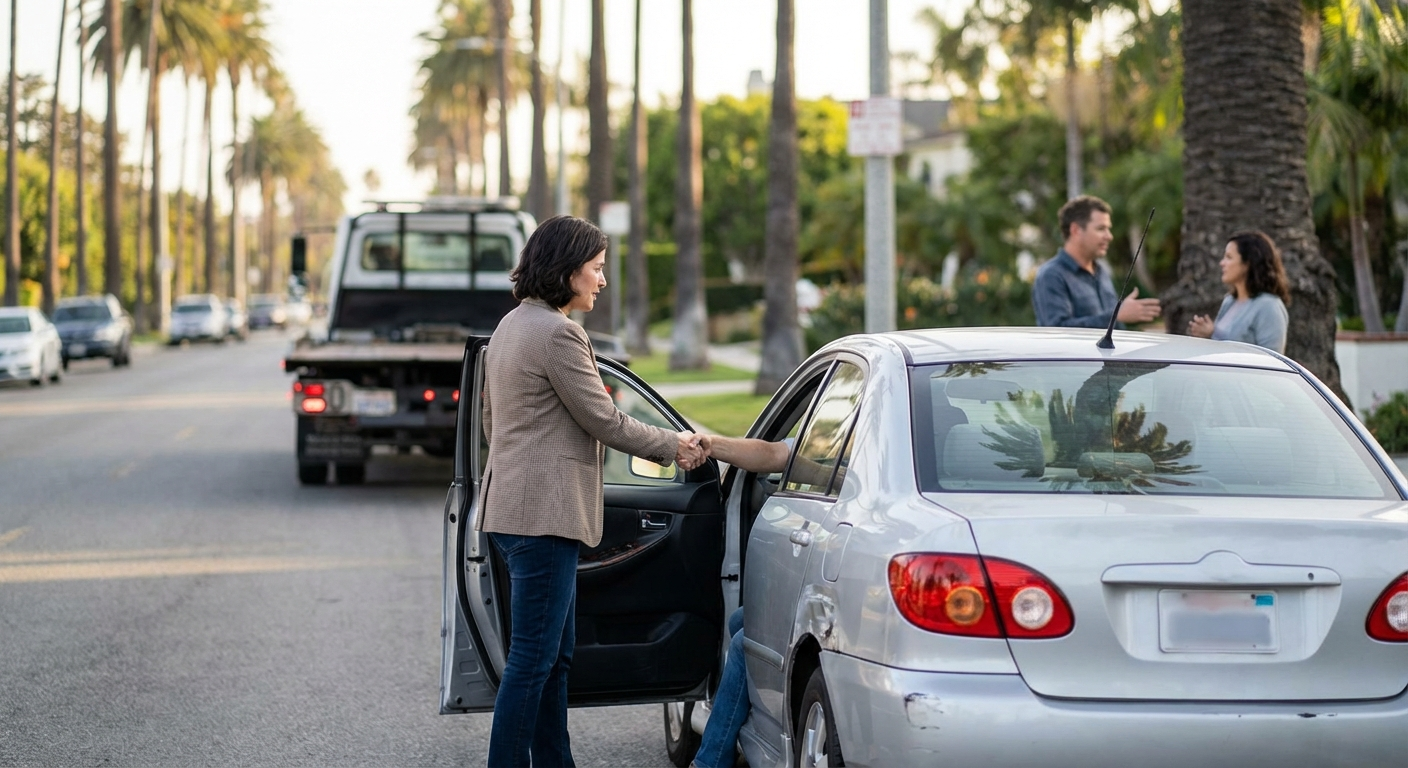
What Accidents Does Forgiveness Cover? And What Does It Miss?
Typically, accident forgiveness is meant for *one* at-fault accident. That’s it.
It doesn’t cover multiple accidents in a short period. If you have a second at-fault crash, say, six months after the first, don’t expect the same grace. You’ll likely see your rates climb dramatically.
It also doesn’t cover major violations. A DUI conviction, reckless driving, or leaving the scene of an accident? No amount of “forgiveness” will save your premiums from skyrocketing—or your policy from being canceled. These are serious offenses that insurance companies simply won’t overlook.
Which brings up something most people miss. Accident forgiveness usually applies only to accidents where you’re determined to be at fault. It doesn’t apply to comprehensive claims, like if your car is stolen from a parking lot in The Valley, or damaged by hail. Those are different parts of your policy entirely.
So, whether your fender bender happens on a busy street in downtown Los Angeles or a quiet backroad in Ventura County, the location matters less than the fault determination and the type of incident.
The Fine Print: Why Accident Forgiveness Isn’t Always a Home Run.
Look, nothing in insurance is truly “free.” Accident forgiveness often comes with a cost, even if it’s hidden.
You might pay a slightly higher premium from the get-go to have this coverage. Think of it as an insurance policy for your insurance rates. For some drivers, that extra cost might not be worth it, especially if they have a spotless driving history spanning decades.
That’s not the whole story. As we discussed, it’s not transferable. If you switch insurers, you start fresh, meaning you lose that built-up forgiveness benefit. And if you use it, the “first accident” clock resets. You’ll need to drive claim-free for several more years to earn it back.
Another point: does it apply to *all* drivers on your policy? Not always. Sometimes, it only covers the primary policyholder or specific named drivers. This is a detail you’ll want to confirm with your agent, especially if you have a household with multiple drivers.
Consider the premium difference. Is it worth paying an extra $50, $100, or even more a year for the *chance* you’ll need it? For some, the peace of mind is priceless. For others, it’s an unnecessary expense. It really depends on your driving habits and your personal risk tolerance.
When Does Accident Forgiveness Make Sense for a California Driver?
Honestly, it’s a personal call, but there are situations where it can be a smart move.
For drivers with a long, clean history who want that extra layer of protection, it’s often a good fit. They’ve proven their responsibility, and this just offers a little cushion against an isolated mistake. It’s like having a spare tire—you hope you never need it, but you’re glad it’s there.
What about families with a new, less experienced driver on the policy? That’s a trickier one. While the *household* might benefit from the overall policy having accident forgiveness, the new driver themselves might not qualify for the benefit until they build their own clean record. You need to check the specifics.
If you’re someone who drives a lot, perhaps commuting across the crowded 101 freeway every day, your exposure to potential accidents is simply higher. In such cases, the peace of mind offered by accident forgiveness could outweigh the extra cost.
Navigating California Auto Insurance: Getting the Real Deal.
The California auto insurance market has been a bit of a roller coaster lately. Premiums jumped 40% between 2022 and 2024 for many drivers, and some carriers even temporarily stopped writing new policies in the state. The rising cost of repairs, parts, and medical care all play a part.
Prop 103, while designed to protect consumers, also means that your driving record is scrutinized. An at-fault accident, even a minor one, can have a lasting impact without accident forgiveness. This is why having an agent who *knows* California’s specific rules and market conditions is essential. Someone like Karl Susman at California Driver Insurance, CA License #0B75129.
We help make sense of it all. We don’t just quote numbers; we look at your whole picture, your driving habits, your specific needs, and whether something like accident forgiveness truly benefits you.
Don’t guess about your coverage. Get a quote that fits your life and offers the protection you actually need. Visit us at https://californiadriverinsurance.com/get-a-quote/
Finding the Right Fit: It’s More Than Just a Price Tag.
Good coverage isn’t just about the lowest premium; it’s about peace of mind, especially when unexpected things happen – like that fender bender on the 405, or a minor crash in a crowded parking lot in San Diego.
Sometimes, paying a little more for a policy that includes accident forgiveness *could* save you a lot more down the road, preventing a hefty premium increase. Other times, for a consistently safe driver, it’s an unnecessary extra, and those funds could be better spent elsewhere.
That’s where a conversation with a seasoned professional comes in handy. We can help you weigh the pros and cons based on your unique situation. We’ll explore all your options and help you decide if this particular perk is a good investment for you.
Ready to see what your options are, with or without accident forgiveness? Start your free quote today: https://californiadriverinsurance.com/get-a-quote/
Frequently Asked Questions About Accident Forgiveness
- Q: Does accident forgiveness apply to any driver on my policy?
A: Not always. It often applies to the primary policyholder, or it might be a specific add-on for individual drivers. Always confirm with your insurer or agent for the exact terms on your policy. - Q: Can I lose my accident forgiveness benefit?
A: Yes. Most policies state that once you use your forgiveness benefit for an at-fault accident, it’s “used up.” You’ll typically need to maintain a clean driving record for several years again to re-qualify for the benefit. - Q: If I have accident forgiveness, does the accident still show on my DMV record?
A: Yes, the accident will still appear on your official driving record with the DMV. Accident forgiveness only prevents your *current* insurer from raising your rates due to that incident; it doesn’t erase the event from public records. - Q: How long do I typically have to wait to qualify for accident forgiveness?
A: This varies by insurer, but a common requirement is maintaining a clean driving record for three to five consecutive years. Some companies also require you to be a policyholder for a minimum period before you’re eligible. - Q: Is accident forgiveness offered by all insurance companies in California?
A: No, it’s not universal. Accident forgiveness is a competitive feature offered by some, but not all, auto insurance companies in California. It’s often a loyalty program or an optional add-on.
This article is for informational purposes only and does not constitute financial advice.